
- 1927 (MCMXXVII)
- 2018 (MMXVIII)
- French
- Lelong, Piguet, Fath, Schiaparelli, Givenchy
- •The Bettina blouse (1952)
- •The sack dress (1957)
- •Audrey Hepburn’s wardrobe
- •Aristocratic minimalism
Hubert de Givenchy
The Beauvais aristocrat who, at twenty-five, opened the simplest house in Paris — and dressed the twentieth century’s most photographed woman.
Hubert de Givenchy was born in 1927 into the minor French aristocracy, in Beauvais. His father, an aviator and marquess, died when Hubert was two; he was raised by his mother and maternal grandmother, whose collection of antique tapestries he later credited with his first formal education.
He apprenticed under Jacques Fath, moved through Piguet and Lelong, and spent four formative years under Elsa Schiaparelli (1947–51). In 1952 he opened his own house at 8 rue Alfred de Vigny. He was twenty-five, the youngest couturier on the Paris calendar. His debut collection was entirely in white cotton — he could not afford silk — and included the Bettina blouse, a ruffled peasant shirt named for the model who wore it.
Audrey
The relationship that defined the house began in 1953. Audrey Hepburn, scheduled to be dressed for Sabrina, arrived at Givenchy's atelier expecting Katharine Hepburn. He agreed, reluctantly, to let her choose from sample racks. The black cocktail dress, wool suit, and evening gown she chose defined her on-screen image and began a forty-year private relationship.
I consider him the only designer I know with an instinct. He has dressed me for thirty-five years and I want to be dressed by him until I die. — Audrey Hepburn, 1982
His work for Hepburn — the little black dresses of Breakfast at Tiffany's (1961), the pink column of Funny Face (1957), the safari tailoring of Charade (1963) — constitutes the most concentrated designer-muse collaboration in twentieth-century cinema.
The Substance
Givenchy was substantively the link between Balenciaga — whom he worshipped — and the next generation of French couture. With Balenciaga he showed the 1957 sack dress, anticipating the 1960s silhouette by half a decade. He introduced, in 1955, the separates collection — the idea that a couture client might buy individual garments rather than a full look. Universal now; radical then.
He sold the house to LVMH in 1988 and retired from design in 1995. He died in 2018 at ninety-one, buried next to Audrey Hepburn's grave at Tolochenaz by his request. The house has passed through Galliano, McQueen, Tisci, Waight Keller, Williams, and — since 2024 — Sarah Burton. Each has inherited the problem he posed: how, in couture, to be simple and not boring.
Related Dispatches

Mod: How British Teenagers Killed Parisian Fashion in the 1960s
Carnaby Street, the Vespa, a geometric mini, a bob cut to the jawline. The youth-culture uprising that, for the first time in fashion history, dictated the terms to Paris.
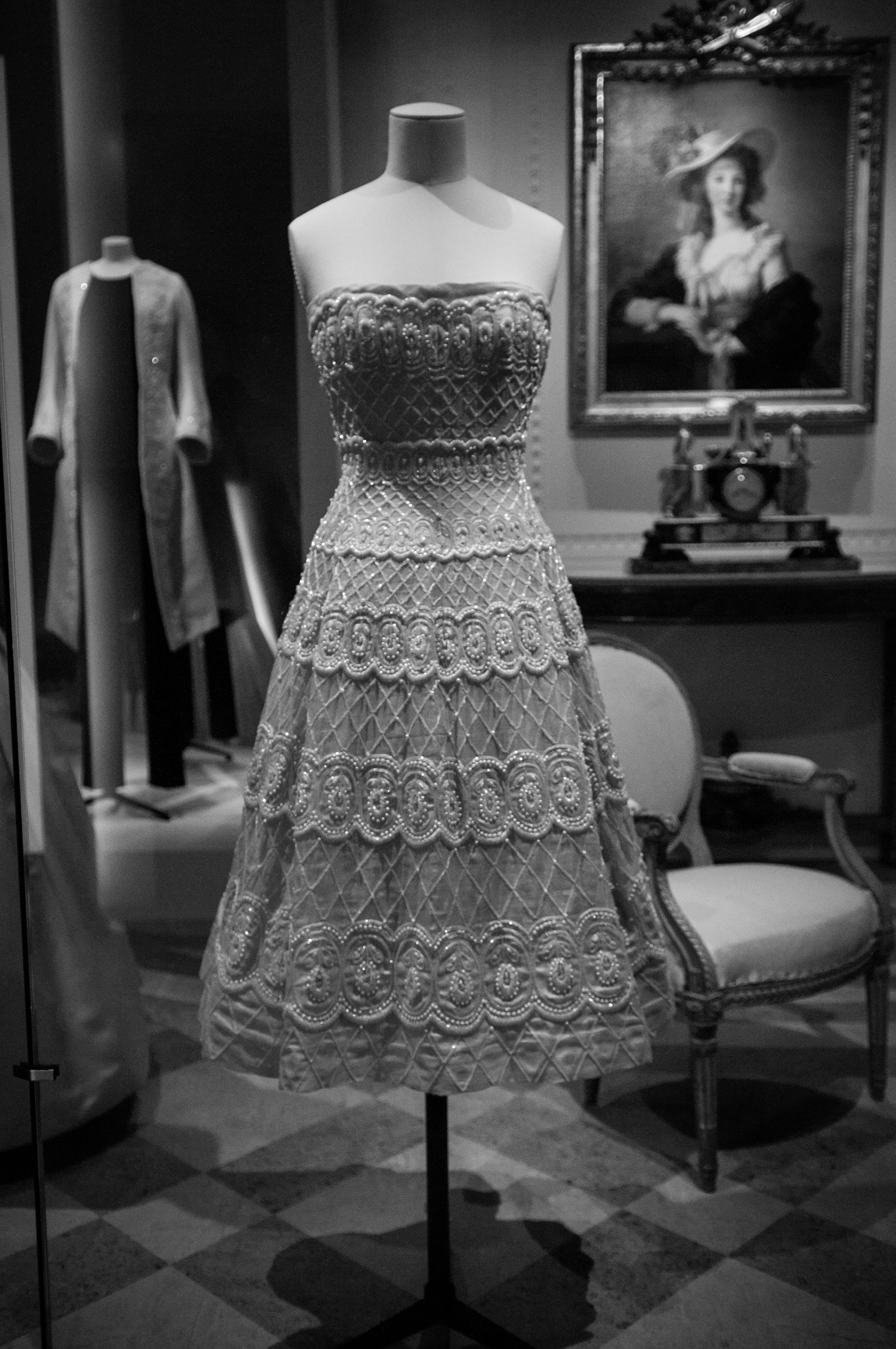
The New Look: Why Women Rioted Over a Dress in 1947
Christian Dior’s February 1947 collection used twenty yards of fabric per skirt at a moment when British women were rationed to two. The reaction was adoration, fury, and an industry rebuilt overnight.
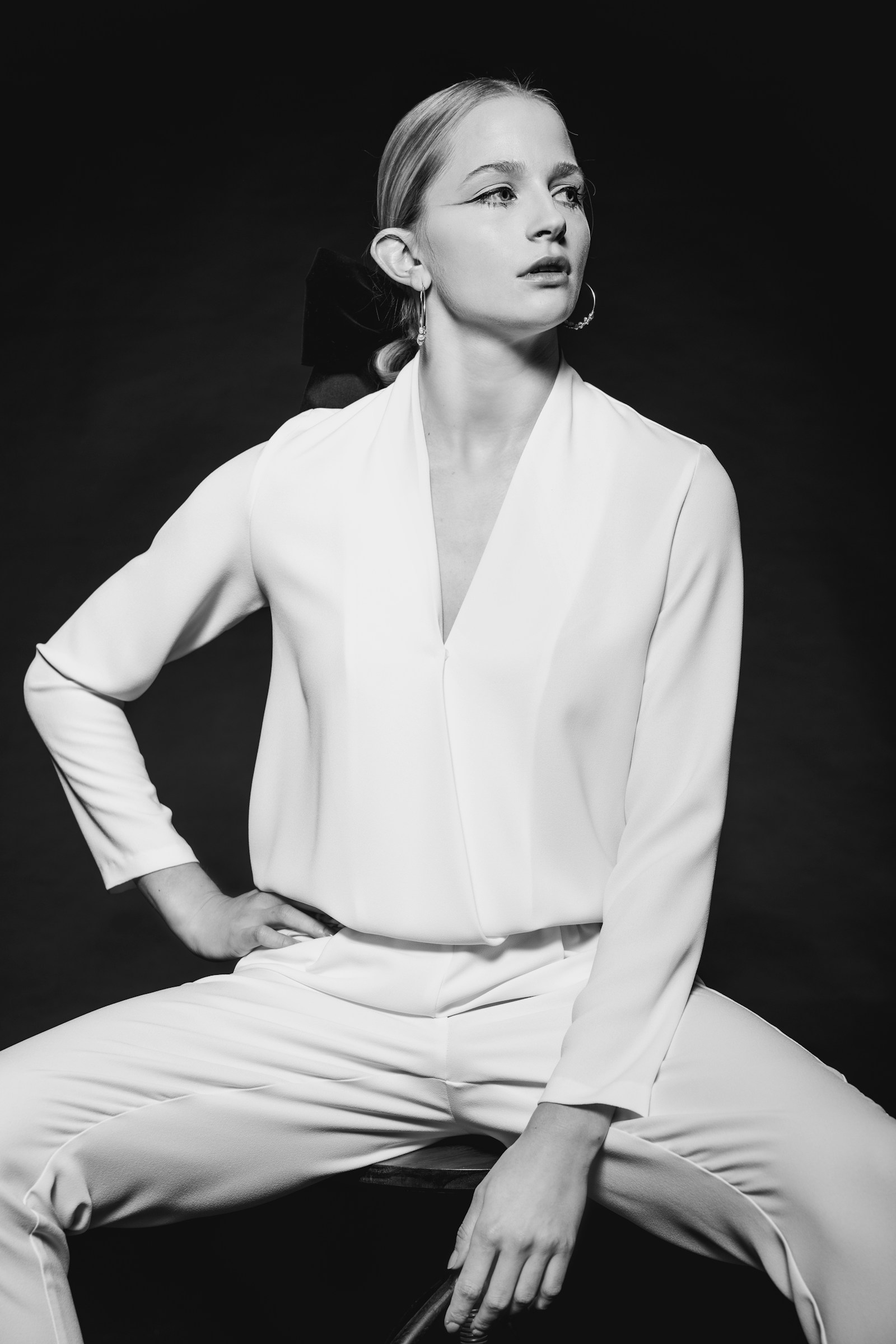
Le Smoking: Yves Saint Laurent Dresses Women in Tuxedos
In August of 1966, an evening tuxedo appeared on a Paris runway. The model was a woman. The century shifted, quietly, on its heel.