
- 1883 (MDCCCLXXXIII)
- 1971 (MCMLXXI)
- French
- Chanel
- •The little black dress
- •Chanel suit
- •Chanel No.5
- •Costume jewellery worn as real
Gabrielle "Coco" Chanel
The milliner from Saumur who replaced the corset with jersey, the waist with a straight line, and the twentieth-century woman with herself.
Gabrielle Bonheur Chanel was born in 1883 in a poorhouse in Saumur, the second of five children to a laundrywoman and an itinerant market trader. Her mother died when she was eleven; her father deposited her and her sisters at the Catholic orphanage of Aubazine, in the Corrèze, and did not return. The austere geometry of the orphanage — black and white, the interlocking Cs of the stained-glass windows — would reappear, unmistakably, in her work.
The Early Houses
Chanel opened her first hat shop in Paris in 1910, at 21 rue Cambon, with capital advanced by the English industrialist Arthur "Boy" Capel. Within three years she had boutiques in Deauville and Biarritz; within a decade she had stopped selling hats and started selling a new silhouette. Jersey — cheap, stretchy, previously used for men’s underclothes — became her signature material. Vogue called her clothes "deceptively simple" in 1916; the phrase has trailed her reputation ever since.
The Vocabulary
The list of items Chanel either invented or codified reads, at this distance, as a list of the twentieth-century wardrobe: the collarless jacket, the sailor pant, the two-tone shoe, the quilted bag, the little black dress, costume pearls worn in the daytime. She made black the colour of a woman who did not need to ask, and then sold it back to her. She launched Chanel N°5 in 1921 and, in doing so, invented the modern economy of couture, in which fragrance pays for the dress.
Luxury must be comfortable, otherwise it is not luxury.
The Occupation
There is no honest account of Chanel that omits her conduct during the German Occupation of Paris. She lived at the Ritz with an intelligence officer, Hans Gunther von Dincklage; she attempted, under Aryanisation laws, to seize sole ownership of Chanel N°5 from the Wertheimer family, who had financed it. The attempt failed. The Wertheimers survived and, postwar, continued to finance her. The perfume outlived the argument.
Legacy
She died in 1971, at 87, at the Ritz. Her atelier reopened the following morning. Karl Lagerfeld assumed creative direction in 1983 and sustained the house, over thirty-six years, as a continuous revival of its founder. The present-day wardrobe still cites her — the tweed jacket, the pearls at lunch, the black dress at dinner. The twentieth-century silhouette, in the end, was drawn in jersey by a woman who refused, from the age of twelve until the age of eighty-seven, to sit still.
Related Dispatches

Elsa Schiaparelli and the Birth of Shocking Pink
Before the colour had a Pantone number, it had a bottle. The surrealist couturier who tinted the twentieth century.
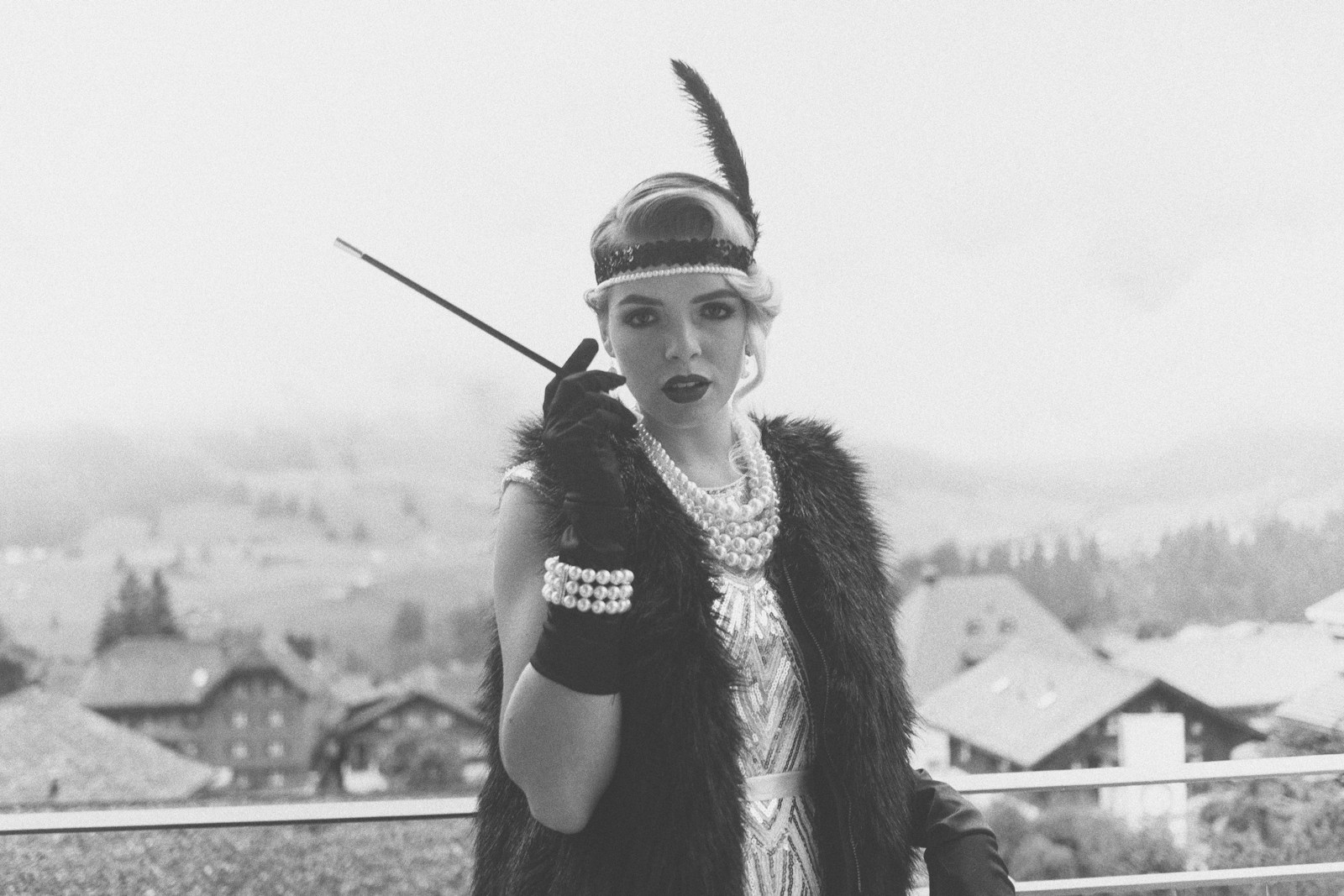
Coco Chanel and the Liberation of the Modern Silhouette
She dressed the twentieth century in jersey, cropped its hair, and freed its waist. The story of how a milliner from Saumur became the architect of modern style.