
- 1936 (MCMXXXVI)
- 2008 (MMVIII)
- French-Algerian
- Dior, Yves Saint Laurent
- •Le Smoking (1966)
- •Mondrian dress (1965)
- •Safari jacket
- •Ready-to-wear with Rive Gauche (1966)
Yves Saint Laurent
Oran, 1936. The couturier who introduced the tuxedo to women’s wardrobes and ready-to-wear to Parisian couture.
Yves Henri Donat Mathé-Saint-Laurent was born in 1936 in Oran, French Algeria, to a French-born mother and a father who managed an insurance firm. He drew dresses compulsively from the age of three. At seventeen he won first prize at the International Wool Secretariat competition; at twenty-one, in 1957, he inherited the House of Dior.
Dior, and the Algerian War
His first collection, the Trapeze line of 1958, was a commercial triumph. His second was less well received. In 1960 he was conscripted into the French army during the Algerian War, suffered a nervous breakdown, was hospitalised and dismissed from Dior. He sued; he won. Within a year he had, with his partner Pierre Bergé, founded his own house.
Rive Gauche
In 1966 Saint Laurent opened Rive Gauche, a ready-to-wear boutique on the rue de Tournon. It was the first such venture by a couture house. Ready-to-wear had, until then, been considered declassé; by the 1970s it was the industry’s primary economic engine. Saint Laurent had, almost single-handedly, concluded the argument.
Fashions fade, style is eternal.
His major propositions — Le Smoking (1966), the safari jacket (1968), the peasant blouse (1976), the Mondrian dress (1965), the Ballets Russes collection (1976) — are, individually, the most-copied silhouettes of the late twentieth century.
Withdrawal
Saint Laurent retired in 2002 and delivered, at the Centre Pompidou, one of the most moving farewells in fashion’s history. He died six years later, in Paris, of brain cancer. Pierre Bergé survived him by nine years. Their collection — art, furniture, couture — was auctioned at Christie’s in 2009 for €374 million, at the time the highest total ever realised for a private collection.
Related Dispatches

Mod: How British Teenagers Killed Parisian Fashion in the 1960s
Carnaby Street, the Vespa, a geometric mini, a bob cut to the jawline. The youth-culture uprising that, for the first time in fashion history, dictated the terms to Paris.
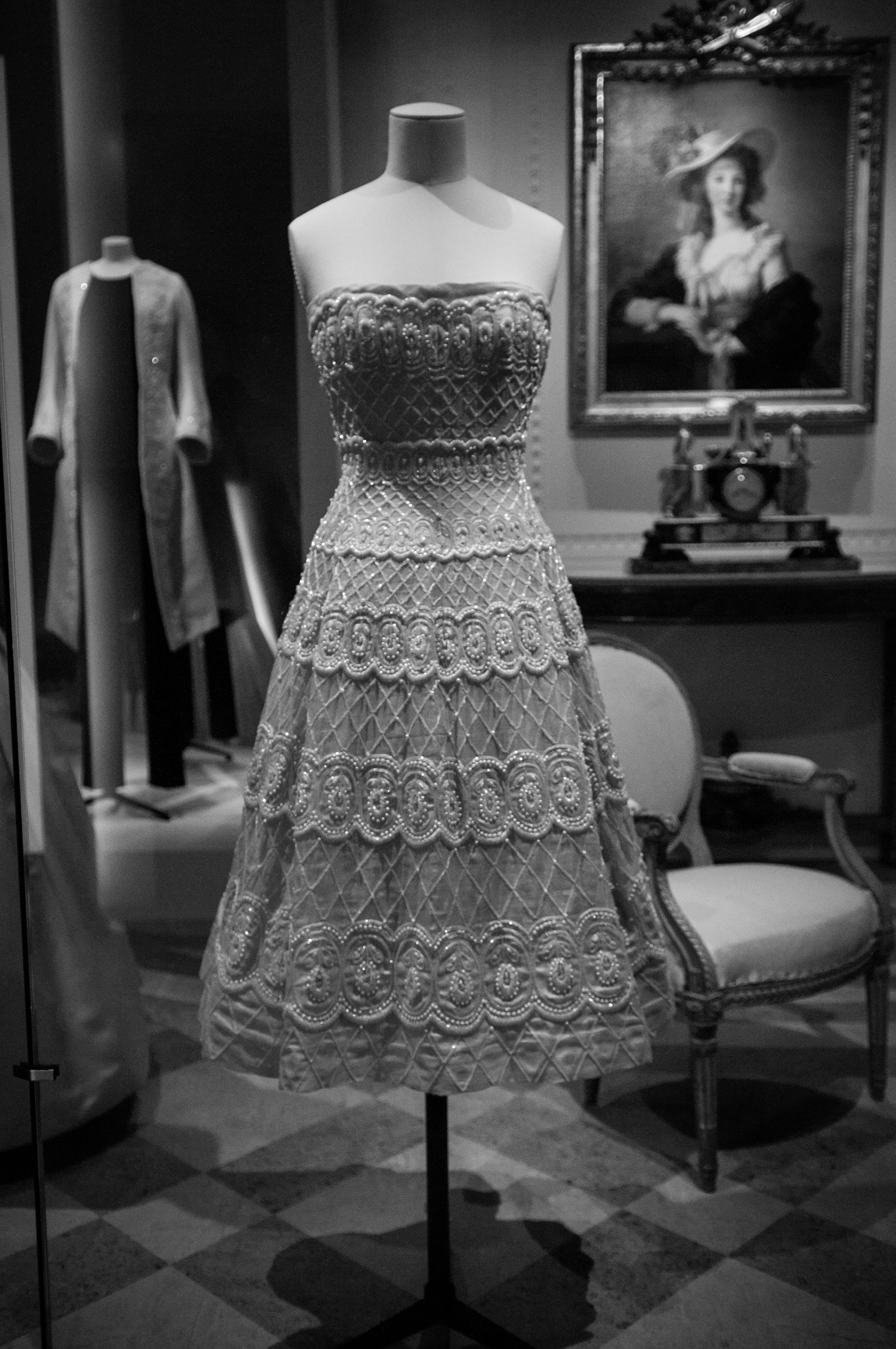
The New Look: Why Women Rioted Over a Dress in 1947
Christian Dior’s February 1947 collection used twenty yards of fabric per skirt at a moment when British women were rationed to two. The reaction was adoration, fury, and an industry rebuilt overnight.

Le Smoking: Yves Saint Laurent Dresses Women in Tuxedos
In August of 1966, an evening tuxedo appeared on a Paris runway. The model was a woman. The century shifted, quietly, on its heel.