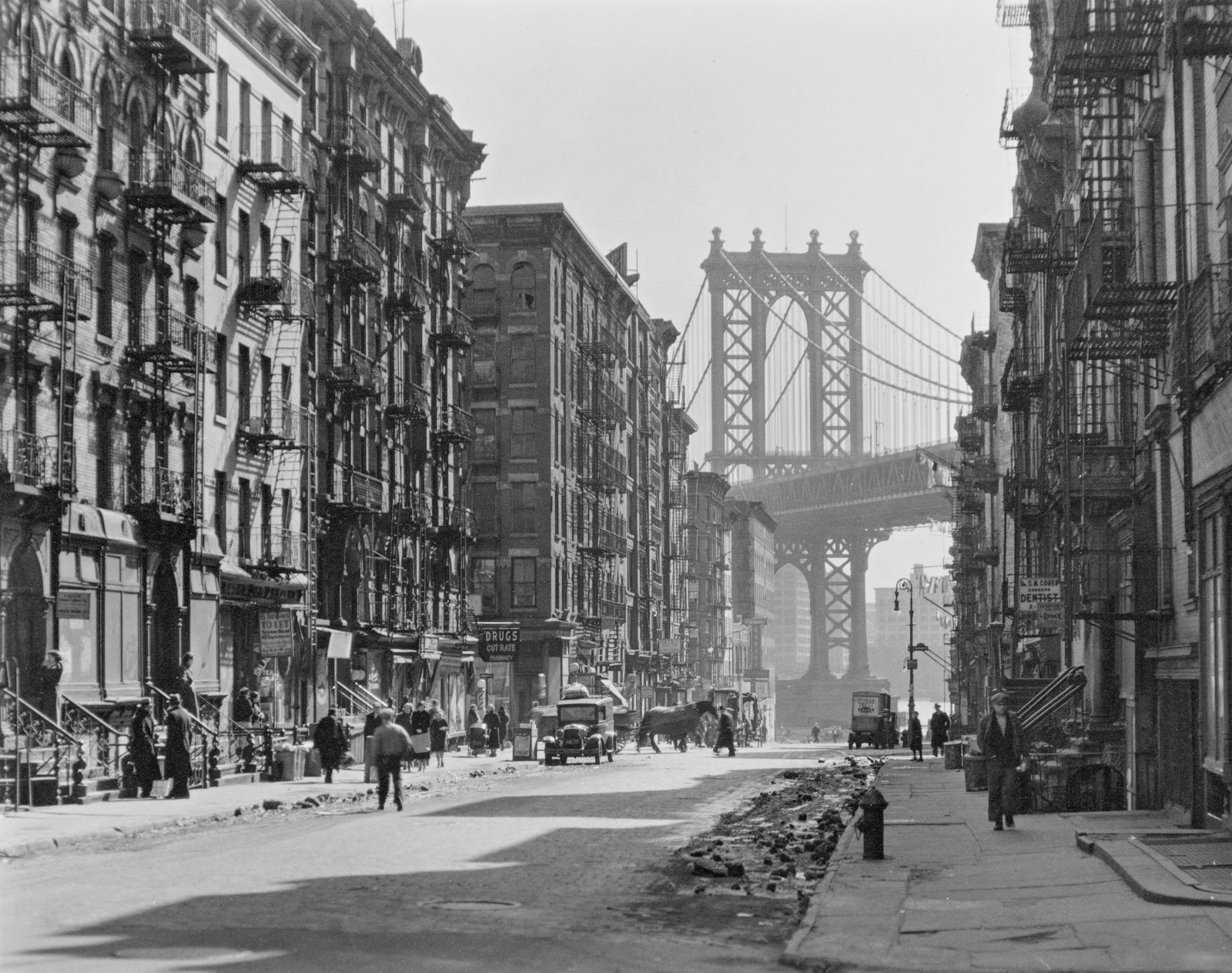
United States
Sportswear and democratic style.
American fashion's great contribution is the idea of *sportswear* — separates, ready-to-wear, clothes that fit into a life rather than a protocol. From Claire McCardell's 1940s dresses to Halston's 1970s ultrasuede to Ralph Lauren's heritage Americana to Virgil Abloh's post-streetwear luxury, the US has consistently democratised what Paris made rare.
The Sportswear Country
Until 1940, American fashion did not exist as a concept. American women with money bought Paris; American women without money bought copies of Paris. The Seventh Avenue garment district made the copies. The editorial press — Vogue, Harper's Bazaar — treated American design as a regional accent on a French language.
Then came the war. In July 1940 the German army entered Paris, and for four years the American fashion industry was cut off from the source. Carmel Snow, at Harper's Bazaar, and Eleanor Lambert, the publicist who invented the New York press week, made a decision: if American women could not have Paris, they would be given American designers instead.
The one who delivered was Claire McCardell. Her leotards, wrap dresses, separates, and ballet flats were not versions of couture. They were sportswear — clothes for a woman who worked, drove, had children, took the subway. By 1945 McCardell had invented a category that Paris had never considered a category at all: ready-to-wear as a primary wardrobe rather than a compromise.
The Seventh Avenue Era
Post-war American fashion was built on three legs. The first was Seventh Avenue itself — the concentration of manufacturing in Midtown Manhattan that could produce McCardell's clothes at scale. The second was the emergence of the American designer-brand: Norman Norell, Mainbocher, Charles James, Halston — each operating as a named couturier but selling largely to the department-store customer. The third was the magazines: Vogue, Harper's Bazaar, Seventeen, Mademoiselle, the New York Times fashion page — the most powerful fashion press in the world.
By the 1970s the model had matured into the modern American designer brand. Ralph Lauren converted a 1962 necktie business into a global heritage empire. Calvin Klein minimalised American dress and sold it back to America. Donna Karan, in 1985, introduced the Seven Easy Pieces — a capsule wardrobe designed for the executive woman in a post-feminist working world.
The African-American Tradition
A parallel history, long underwritten, is the African-American contribution to American fashion. Ann Lowe designed Jacqueline Bouvier's wedding dress in 1953; Zelda Wynn Valdes dressed Josephine Baker; Willi Smith, Stephen Burrows, Patrick Kelly built independent houses that sold the Black urban silhouette back to the fashion establishment. In the 2010s this tradition crystallised in Virgil Abloh (Off-White, Louis Vuitton menswear, 2018) and Telfar Clemens — the first African-American designer to break, at scale, into the mainstream luxury conversation.
Streetwear and the Present
The 2000s and 2010s belonged to streetwear. The trajectory from Shawn Stussy's Huntington Beach print-shop (1980) to Hiroshi Fujiwara's Harajuku retail (1990s) to Supreme (1994) to Louis Vuitton × Supreme (2017) to Virgil Abloh's Louis Vuitton menswear debut (2018) is the most-documented American fashion story of the twenty-first century. What began as skater and hip-hop uniform is now the dominant vernacular of global luxury menswear.
The American fashion proposition remains, at its core, the one McCardell identified in 1942: clothes for an unprotocoled life. No other country has sold more of that to the world. It is, still, the American export.
United States’s Designers, in Order of Arrival
Reading from past to present, with cultural context interleaved between the portraits.
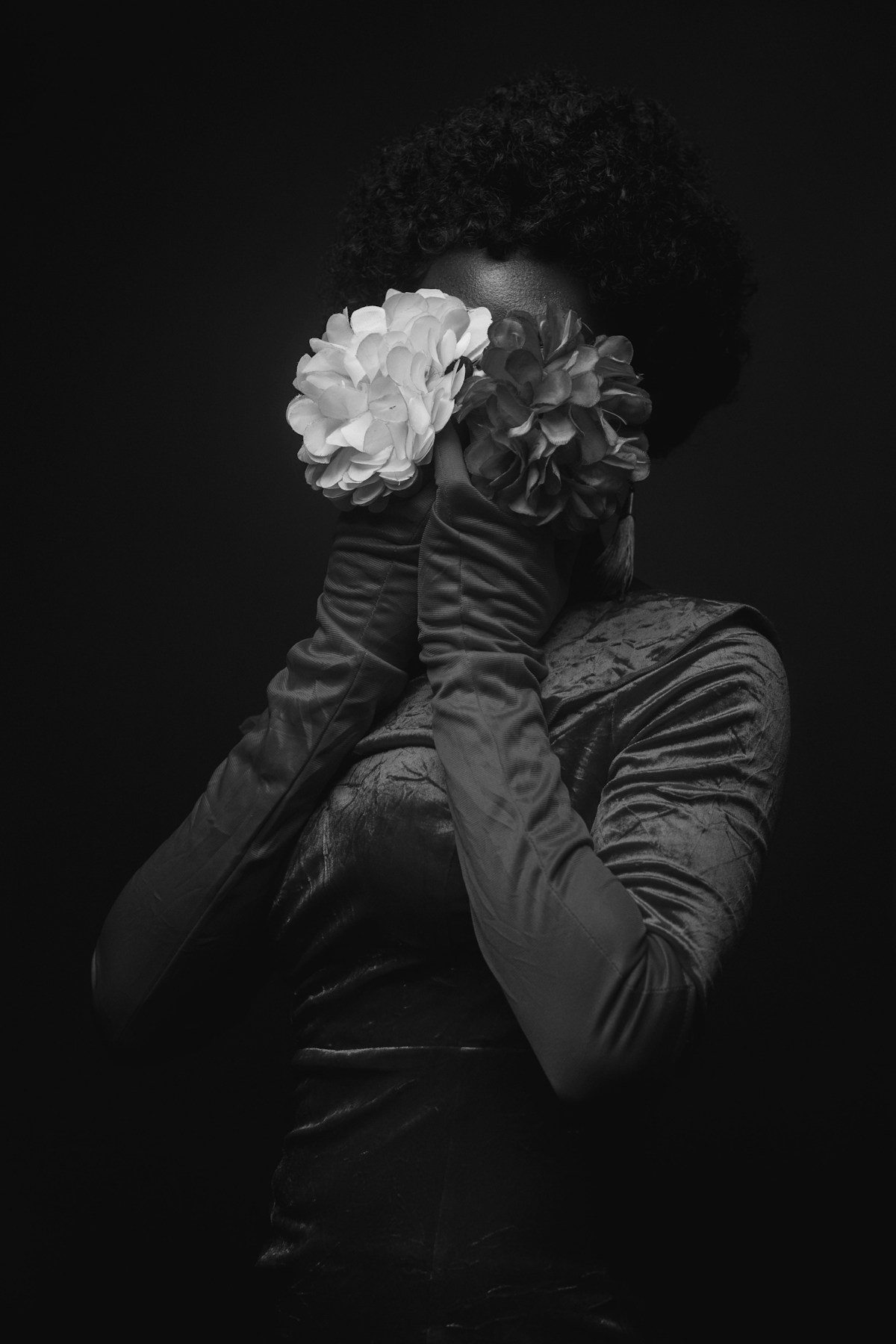
Mainbocher
Wallis Simpson’s wedding dress (1937)
The Chicago-born Vogue editor who became the first American couturier to open in Paris — and designed the most-photographed wedding dress of the twentieth century.
Read full profile →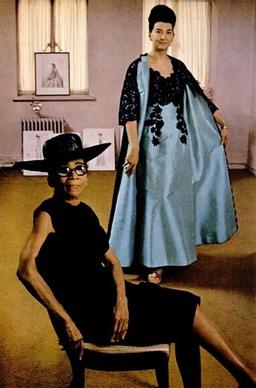
Ann Lowe
Jackie Kennedy’s wedding dress (1953)
The Alabama-born Black couturier who made Jackie Kennedy’s 1953 wedding dress — and whom the First Lady, for decades, declined to credit by name.
Read full profile →
Norman Norell
Mermaid sequin gown (1940s)
The Noblesville, Indiana, tailor who made Seventh Avenue produce couture-grade garments — and then, with the "Mermaid gown," turned the sequined sheath into American evening wear.
Read full profile →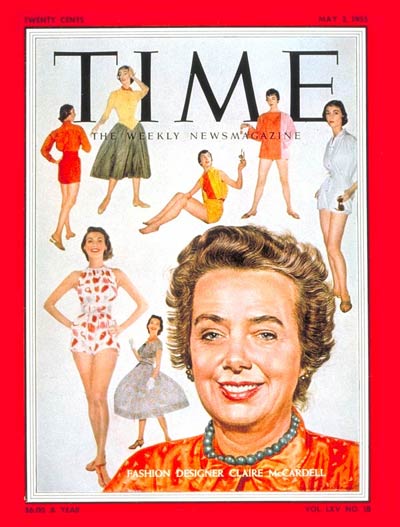
Claire McCardell
The Monastic dress (1938)
The Frederick, Maryland, designer who invented American sportswear — functional, affordable, mass-produced, and photographed on working women rather than society ladies.
Read full profile →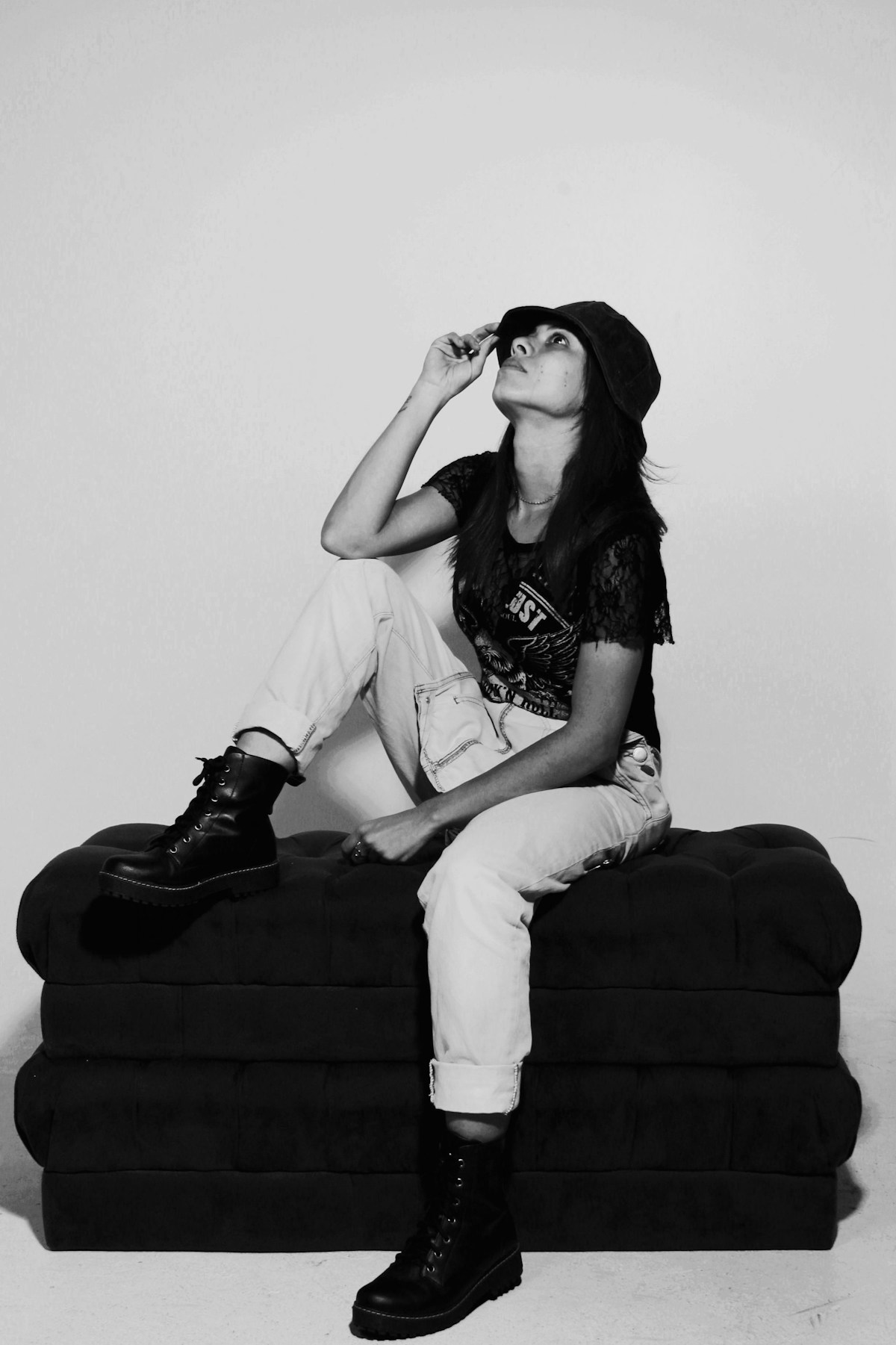
Zelda Wynn Valdes
The original Playboy Bunny costume (1960)
The Chambersburg-born Black designer who dressed Ella Fitzgerald, Dorothy Dandridge, and Josephine Baker — and, in 1960, designed the original Playboy Bunny costume.
Read full profile →
Charles James
The Clover Leaf ball gown (1953)
The difficult genius who, from a suite at the Chelsea Hotel, engineered the most sculpturally ambitious ball gowns of the twentieth century — and went bankrupt three times.
Read full profile →
Halston
The pillbox hat (Jackie Kennedy, 1961)
The Iowa-born milliner who designed Jackie Kennedy’s pillbox hat, built American luxury minimalism, presided over Studio 54, and lost his name in a disastrous licensing deal.
Read full profile →
Stephen Burrows
The lettuce hem (1970)
The Newark-born designer who invented the lettuce hem, represented the United States at the Battle of Versailles in 1973, and brought colour saturation to American jersey.
Read full profile →
Norma Kamali
The sleeping bag coat (1973)
The Manhattan-born designer who made a sleeping bag into a coat, gave Farrah Fawcett her red swimsuit, and — at seventy-nine — still operates her Midtown boutique personally.
Read full profile →
Willi Smith
Streetwear as category
The Philadelphia designer who invented “streetwear” — the word and the category — a decade before Stussy, and ran the most successful Black-owned American fashion label of the 1980s.
Read full profile →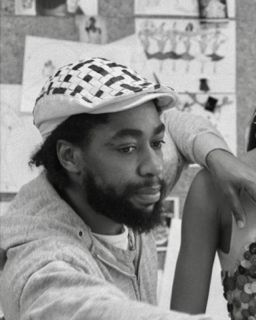
Patrick Kelly
Button-covered dresses
The Vicksburg, Mississippi, designer who arrived in Paris with one suitcase and became, in 1988, the first American and first Black designer voted into the French couture federation.
Read full profile →
Yeohlee Teng
Zero-waste pattern cutting
The Penang-born, New York-based designer whose pattern-cutting approach eliminates fabric waste — and whose minimalist uniforms are held by MoMA.
Malaysian-born; New York based since the 1970s.
Read full profile →
Virgil Abloh
Quotation marks as design
A civil engineer from Rockford, Illinois, who became the first Black artistic director of a European menswear house and, in a career of just twelve years, recoded the language of luxury.
Ghanaian-American; worked between Chicago, Milan (Off-White) and Paris (Louis Vuitton).
Read full profile →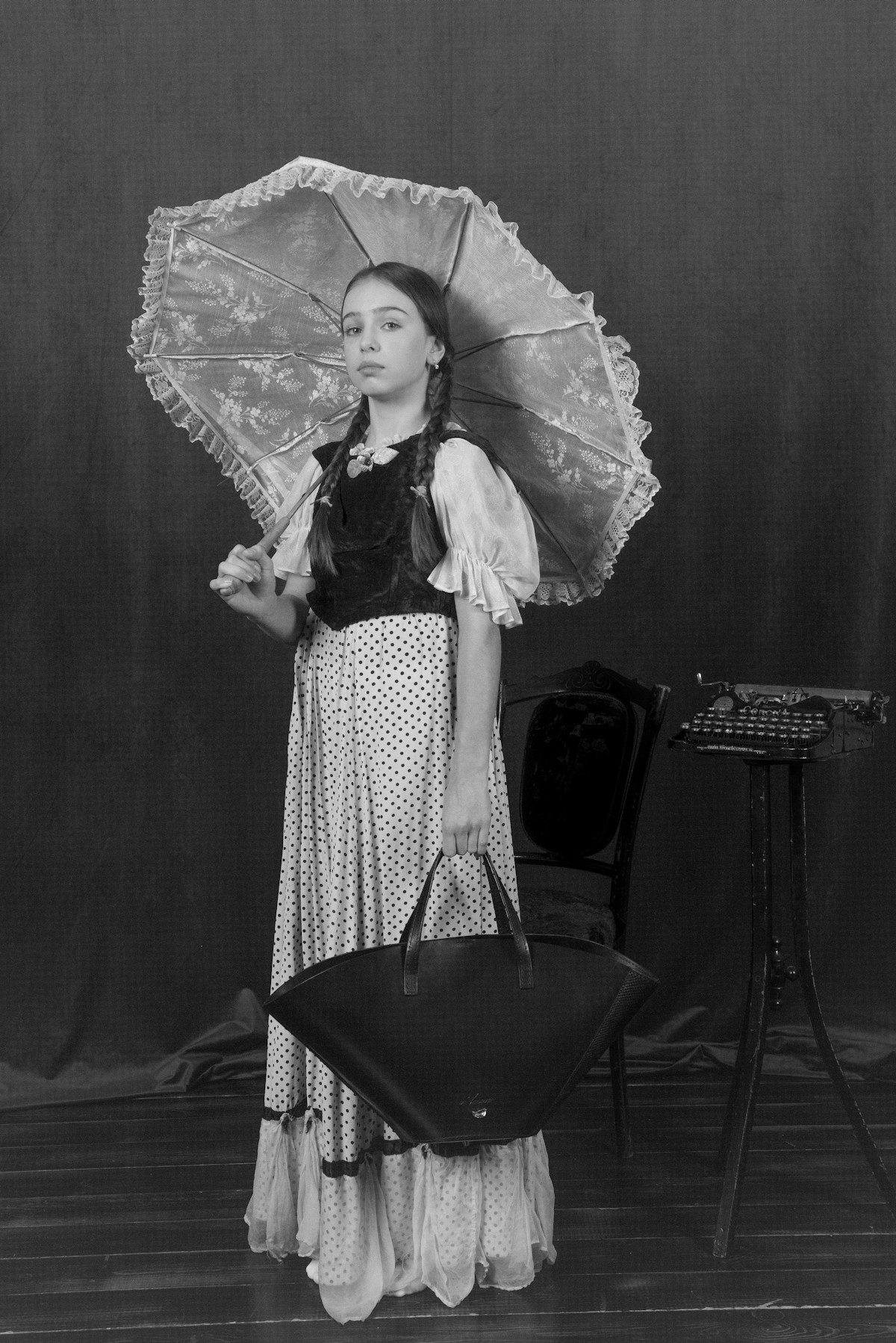
Telfar Clemens
The Telfar shopping bag (2014)
The Queens-born Liberian designer whose shopping bag — the "Bushwick Birkin" — has redefined accessible luxury.
American-Liberian; New York based.
Read full profile →