Mexico
Indigenous craft revival.
Mexican fashion is the most sophisticated Latin American response to the indigenous-craft question. Carla Fernández, Lorena Saravia, and the Mexico City Fashion Week calendar have built a design language that works directly with the Zapotec, Mixtec, Otomí, and Maya weaving communities — producing contemporary ready-to-wear that credits, compensates, and collaborates with the craft source. It is the most ethically developed craft-collaboration model in contemporary fashion.
The Longest Continuous Weaving Tradition in the Americas
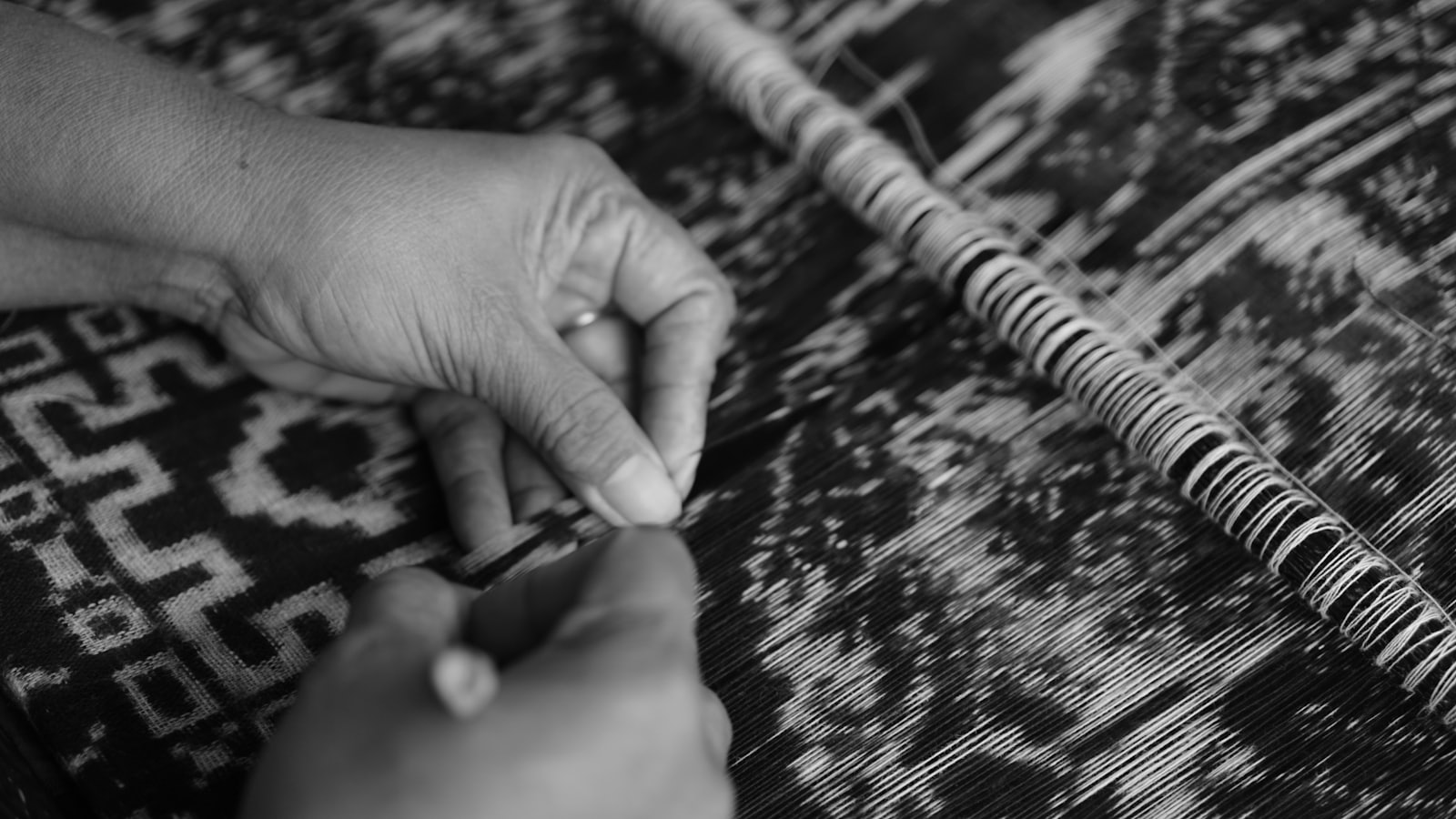
Mexico has, by a significant margin, the longest continuous weaving tradition in the Western Hemisphere. Backstrap-loom cotton weaving was practised across Mesoamerica by 1400 BCE — nearly two thousand years before the Roman Empire produced its first documented textiles. The huipil (a squared blouse or tunic, still worn by millions of indigenous Mexican women daily), the rebozo (a long rectangular shawl), and the enredo (a wrap-around skirt) were fully developed garments by the time of the Aztec empire. Every major indigenous group — Zapotec, Mixtec, Maya, Otomí, Huichol, Nahua, Tarahumara — developed its own regional variation, recognisable by motif, colour, and technique.
The Spanish conquest of 1519–1521 did not destroy this tradition — a fact that distinguishes Mexican textile history sharply from the Bengali, Peruvian, or North American cases. The Spanish introduced the treadle loom, sheep's wool, silk, and new dyes (cochineal from Oaxaca, which became Europe's dominant red dye through the colonial period, was Mexican), but the indigenous backstrap weaving continued in parallel. Five hundred years later, it still does. Approximately one million women in contemporary Mexico earn income, at least partially, from traditional hand-weaving.
The Mid-Century Preservation Push
The institutional framework for Mexican craft preservation dates to the 1940 Cárdenas government, which established the first state programmes supporting indigenous textile cooperatives. FONART (the National Fund for the Development of Crafts) was founded in 1974 under the López Portillo administration. The Museo Nacional de Antropología in Mexico City has, since its 1964 opening, treated indigenous dress as a primary ethnographic category alongside pre-Columbian stone sculpture. No other Latin American country matches this institutional commitment.
The economic problem that these programmes were designed to address, however, is that traditional craft economies do not, by default, scale well. A Oaxaca weaver producing a single huipil over two weeks earns, at cooperative prices, perhaps fifty to one hundred US dollars; the same garment retailed in Mexico City or New York sells for six to twenty times that. For most of the twentieth century the beneficiaries of the Mexican craft economy were middlemen — both domestic and foreign — rather than the weavers themselves.
Carla Fernández and the Collaborative Model
The designer who restructured this relationship is Carla Fernández, who founded her Mexico City atelier in 2000 and pioneered what she calls the Taller Flora model. Fernández's design process begins in the craft communities themselves: she travels to Oaxaca, Chiapas, Yucatán, or Puebla, spends weeks in the cooperatives, co-designs specific collections with the weavers, and then returns the designs to the communities for production. The crucial innovation is the credit and compensation structure: every Carla Fernández garment carries the name of the weaving community on its label; revenue is split transparently with the cooperatives; design royalties accrue back to the source community rather than to the designer.
The model has been formally studied by fashion ethicists at Parsons and the Royal College of Art as the most developed example of non-extractive craft collaboration in contemporary fashion. Fernández has produced collaborations with Carolina Herrera (post-2019 reconciliation), collections for the Louvre (2023), and retail at the Museum of Modern Art in New York. She is, in the contemporary fashion ethics literature, the benchmark case.
The Herrera Controversy
Mexican fashion's most-publicised international moment came in June 2019, when the Mexican government's Ministry of Culture wrote an open letter to Carolina Herrera — the American-Venezuelan house, based in New York — accusing its resort 2020 collection of appropriating the traditional Saltillo sarape pattern and the Tenango embroidery of the Hidalgo Otomí community without credit, compensation, or consultation. The letter was unusual: national governments rarely publicly intervene in individual fashion-house decisions. It was also, strategically, effective. The controversy reset the international conversation about fashion's relationship to indigenous textile and pushed several major European houses (including Dior in 2022 and Carolina Herrera itself in subsequent seasons) toward more structured indigenous-collaboration protocols.
The Contemporary Scene
The contemporary Mexican fashion industry, centred on Mercedes-Benz Fashion Week Mexico (launched 2007), supports a design community considerably larger than its international visibility suggests. Lorena Saravia, the 2014 Mercedes-Benz Prize winner, has taken the Fernández collaborative model to Paris. Raul Lopez (Luar), Victor Barragán, Bárbara Sánchez-Kane, and Julia y Renata operate in various configurations of indigenous-collaborative design. The Guadalajara-based Kris Goyri represents the commercial end; the Oaxaca-based Ibarra Ibarra represents the craft-based cooperative end.
Mexico has not, historically, been part of the Paris or Milan calendar. What it has built instead is the global intellectual reference for how contemporary fashion should relate to indigenous textile. In a decade when every major European house has been forced to reckon with that question, the Mexican model — developed quietly over twenty years in Mexico City and Oaxaca — is increasingly the template.
Mexico’s Designers, in Order of Arrival
Reading from past to present, with cultural context interleaved between the portraits.
No designers catalogued here yet — dispatches forthcoming.