Streetwear: How a New York Skate Shop Conquered Paris Fashion
A graphic tee from Lafayette Street, a hoodie from Harajuku, a sneaker drop announced on Instagram. The forty-year migration of skate-and-hip-hop dressing from subculture to luxury runway.
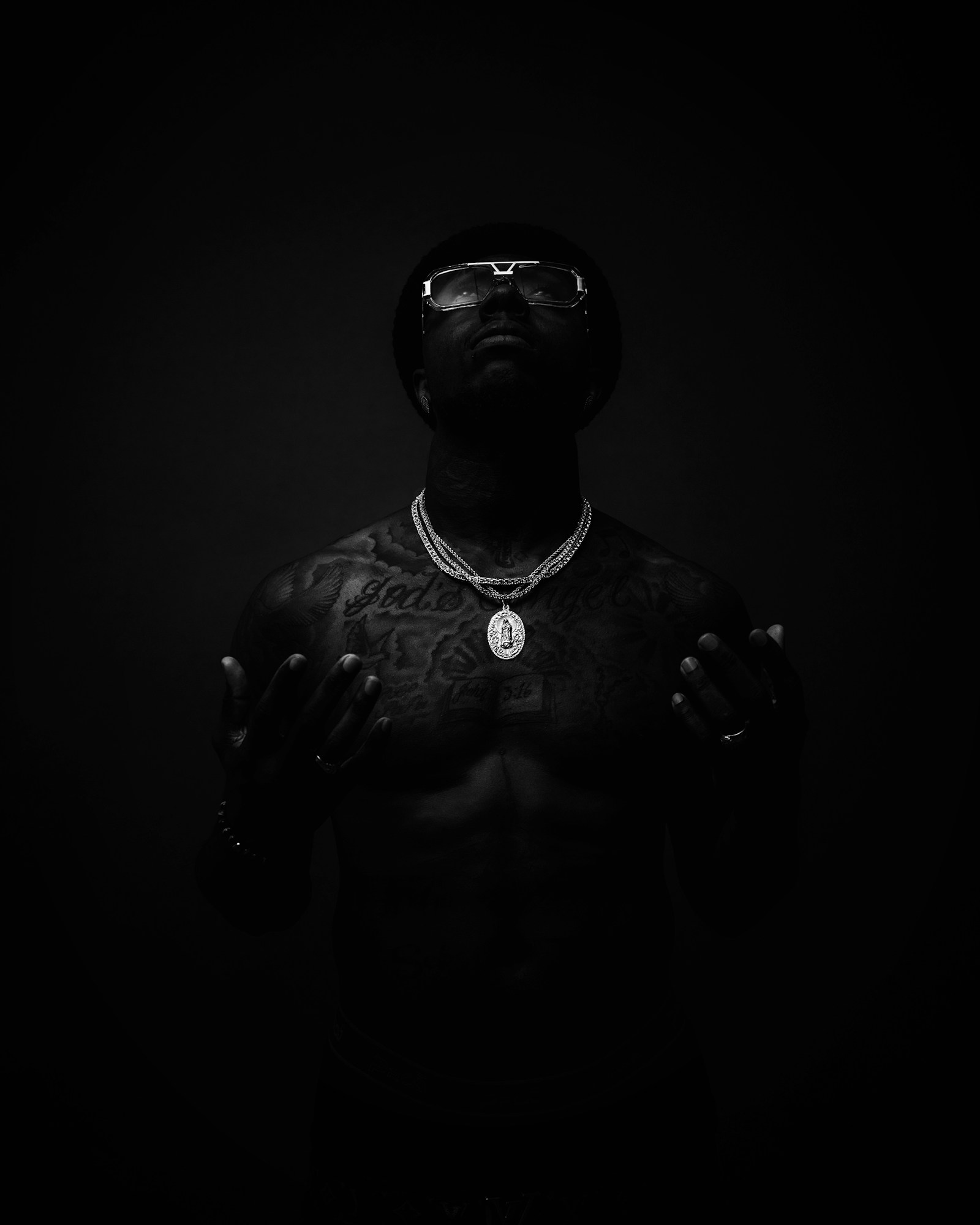
1990s Streetwear era, MCMXC–MCMXCIX
In 2018, Louis Vuitton — a Paris luggage house with a 164-year history, a roughly $15 billion annual revenue, and a creative-director lineage that ran from Marc Jacobs through Kim Jones — hired a Black American architect-trained DJ named Virgil Abloh to lead its menswear. The appointment was, by the standards of French luxury, scandalous. Abloh had no formal fashion education. He had been, until 2013, the creative director of Kanye West's design office. His own label, Off-White, founded in 2012, was four years old at the time of the hire.
The appointment also confirmed, with greater clarity than any single industry event before it, that streetwear had won. The category that had begun in 1980 in a Laguna Beach surfboard shop, that had crossed into hip-hop wholesaling on 125th Street in Harlem in 1982, that had built itself a permanent New York retail presence on Lafayette Street in 1994, and that had spent thirty years being marketed at non-luxury price points, was now — visibly, structurally, financially — the dominant aesthetic of the most expensive fashion houses in the world.
Abloh's death in November 2021, at forty-one, did not reverse the win. The houses he had moved into — Louis Vuitton, then briefly Off-White's residual influence at every Paris house through 2024 — have not relinquished the position. The streetwear era is, in the most defensible reading, ongoing.
Origins
The category has four origin points, which are usually conflated and should be separated.
The first is California skate-and-surf, beginning in 1980 with Shawn Stüssy of Laguna Beach, who began screen-printing his surname (in a deliberately sloppy graffiti hand) onto t-shirts and selling them out of his car. By 1984 Stüssy was a wholesale operation; by 1989 it had retail in Tokyo and London. The Stüssy logotype is, in formal terms, the original streetwear graphic.
The second is New York hip-hop wholesaling, beginning in 1982 with Daniel Day — known as Dapper Dan — who opened a 24-hour atelier on 125th Street in Harlem that produced custom garments using counterfeit Louis Vuitton, Gucci, and MCM monogram fabric. Day's customers were, in the 1980s, the rising hip-hop and boxing class — LL Cool J, Eric B & Rakim, Mike Tyson — who had the disposable income for luxury but were turned away from Madison Avenue boutiques. His shop was raided by Fendi in 1992 and forced to close. Twenty-five years later, in 2017, Gucci hired him back.
The third is Tokyo's Harajuku district, where from 1993 a small group of designers — NIGO of A Bathing Ape, Hiroshi Fujiwara of Goodenough, Jun Takahashi of Undercover, Tetsu Nishiyama of Wtaps — produced the Ura-Hara (back-Harajuku) movement: small-batch graphic-driven streetwear, sold in single shops, with deliberately limited stock and weekly drop calendars. The drop model that contemporary streetwear has globalised is, in its specifics, a Japanese 1990s invention.
The fourth is New York skate-and-graffiti, beginning in April 1994 with James Jebbia's Supreme on Lafayette Street, which combined the California skate-shop format, the New York graffiti aesthetic, and the Japanese drop model into a single retail format that has, in the thirty years since, become the industry's reference point.
The Style
Streetwear's contemporary wardrobe has roughly nine items.
The graphic t-shirt, in 100% cotton jersey, with a logotype, slogan, or appropriated image. The Stüssy and Supreme box-logo t-shirts are the canonical examples; the Off-White diagonal-stripe and quotation-mark graphics are Abloh's contribution.
The hoodie, in heavyweight French terry or fleece, often oversized, often graphic-printed. The Champion reverse-weave hoodie is the form's reference garment; collaborative hoodies (Off-White × Nike, Supreme × North Face, Fear of God × Ermenegildo Zegna) are the contemporary luxury format.
The sneaker — the category's most commercially developed item. The Nike Air Force 1 (1982), the Adidas Stan Smith (1965, re-popularised 1994 by Phoebe Philo, ironically), the Air Jordan (1985), and the running-shoe-derived dad-shoe silhouettes (Balenciaga Triple S, 2017) constitute the period's primary sneaker vocabulary. The collectible sub-economy around limited-release sneakers (Nike SB Dunks, Yeezy 350s) sustained, for a period, secondary-market values exceeding $5,000 per pair.
The selvedge denim jean, often Japanese (Iron Heart, Studio D'Artisan, The Real McCoy's), often raw, faded by the wearer rather than the manufacturer. The streetwear denim conversation is parallel to a longer Japanese conversation about American workwear authenticity.
The bomber jacket (in nylon, often with knit cuffs and collar), the utility jacket (in heavy cotton or canvas, with multiple flap pockets), and the technical-fabric outerwear (Gore-Tex shell, Goretex Pro, Arc'teryx in particular). The category increasingly overlaps with technical mountain-sportswear.
The cap — baseball cap (5-panel or 6-panel), often by New Era, with a graphic or logo. The 1990s "fitted cap" sub-economy in New York (the New Era 59FIFTY cap as collectible) is the form's most committed consumer base.
Drops, queue culture, and resale. Streetwear's commercial structure is its most distinctive feature: a small number of units released on a fixed weekly schedule, sold first to in-person queues at flagship stores, then resold through secondary platforms (StockX, GOAT, Grailed) at multiple times the retail price. The model migrated to luxury in the 2010s; the 2017 Louis Vuitton × Supreme collaboration, with thirty-minute pop-up store sales, was the moment the migration completed.
Cultural Context
The category's rise tracked, almost exactly, the rise of hip-hop's commercial dominance. By the early 1990s hip-hop had become the dominant American popular-music genre by sales; by 2017 it had passed rock as the most-streamed genre. The wardrobe of hip-hop's leading figures — Run-DMC's adidas Superstars in 1986; LL Cool J's Kangol bucket hat; the Wu-Tang Clan's Carhartt and Timberland combinations of 1993; Pharrell's BAPE-and-Ice-Cream-of-2003; Kanye West's continuous wardrobing through every collaborative phase — was, increasingly, the wardrobe the broader culture watched.
The economic effect was significant. By 2018, sneaker resale alone was a $2 billion annual market in the US; by 2024 the global streetwear market was estimated at $185 billion. The luxury houses' decision to participate — Louis Vuitton × Supreme, Dior × Air Jordan, Gucci × Dapper Dan, Balenciaga's continuous Demna-era overlap with the category since 2015 — was a reading of where luxury's growth was actually coming from.
The cultural-equity question, however, has been continuously contested. The category's roots in Black-American hip-hop and skate culture have generally not been credited at proportionate scale by the European houses now profiting from it. Dapper Dan's twenty-five-year exclusion from the industry he had been the first to combine with luxury is the most pointed instance. Virgil Abloh's appointment at Louis Vuitton was, for many critics, the symbolic correction — but it was a correction at the very end of a long series of un-paid borrowings.
Legacy
The category, in 2026, is no longer a subculture; it is the dominant operating model of the luxury industry. The drop calendar — a weekly or monthly limited release of small-batch product, marketed through Instagram and direct-to-consumer e-commerce — has been adopted by every major luxury house. Logo-graphic dressing has returned, in deliberately streetwear-coded form, to runways from Balenciaga to Bottega Veneta. The sneaker is, by category, the largest single footwear segment in luxury sales globally.
The structural inheritance is larger than the wardrobe itself. Streetwear introduced into fashion four operational practices that have not since left:
- The collaboration, as a primary product format. Before 2000, "designer collaborations" were rare and prestige-coded; after 2017 they are weekly and revenue-foundational.
- The drop, replacing the seasonal collection. Spring/summer/autumn/winter calendars are now, for many houses, vestigial; the actual product cadence is monthly.
- The community as marketing channel. Streetwear customer communities — SoleCollector forums, the SUPREME line, the BAPE/Wtaps Tokyo collector scene, contemporary Discord servers — are operationally how the category is sold. Luxury has, since 2018, been studying how to imitate this.
- The hybrid creative director, who is as often a DJ, an architect, a music-video director, or a graphic designer as a fashion graduate. Pharrell Williams's 2023 appointment at Louis Vuitton men's followed Virgil Abloh's; NIGO at Kenzo since 2021 sits in the same line; Jonathan Anderson's appointment at Dior in 2025 is, in this sense, the establishment of the new norm.
The category is now broad enough that the term streetwear has, by some critics, lost its descriptive force. What it described was a forty-year migration of subcultural dress to industry centre. That migration is now complete. The clothes are, simply, the clothes that contemporary fashion is.
Related Reading
- Virgil Abloh — the architect-trained DJ who concluded the merger.
- The 1990s Streetwear era — the decade the category formalised.
- Punk — the 1970s subculture-to-luxury precedent.
- Disco — a different, earlier, version of the same migration.
Sources & Further Reading
- Vanessa Friedman, "Virgil Abloh and the Future of Fashion," The New York Times, 2018–21 archive.
- Daniel Day, Dapper Dan: Made in Harlem (Random House, 2019).
- W. David Marx, Ametora: How Japan Saved American Style (Basic Books, 2015).
- The archives of Hypebeast and Highsnobiety, 2005–present.
- Jian DeLeon, ed. Streetwear: The Insider's Guide (Thames & Hudson, 2018).

Ivo Marchetti
Writer and dress historian. Ivo contributes regularly on menswear, subculture, and the economics of style.
Related Dispatches

Minimalism: Why 1990s Restraint Still Defines Luxury Today
A bias-cut slip in undyed silk, a sleeveless shift in undyed wool, a bag with no logo at all. The decade that decided that subtraction was a luxury proposition — and was right.
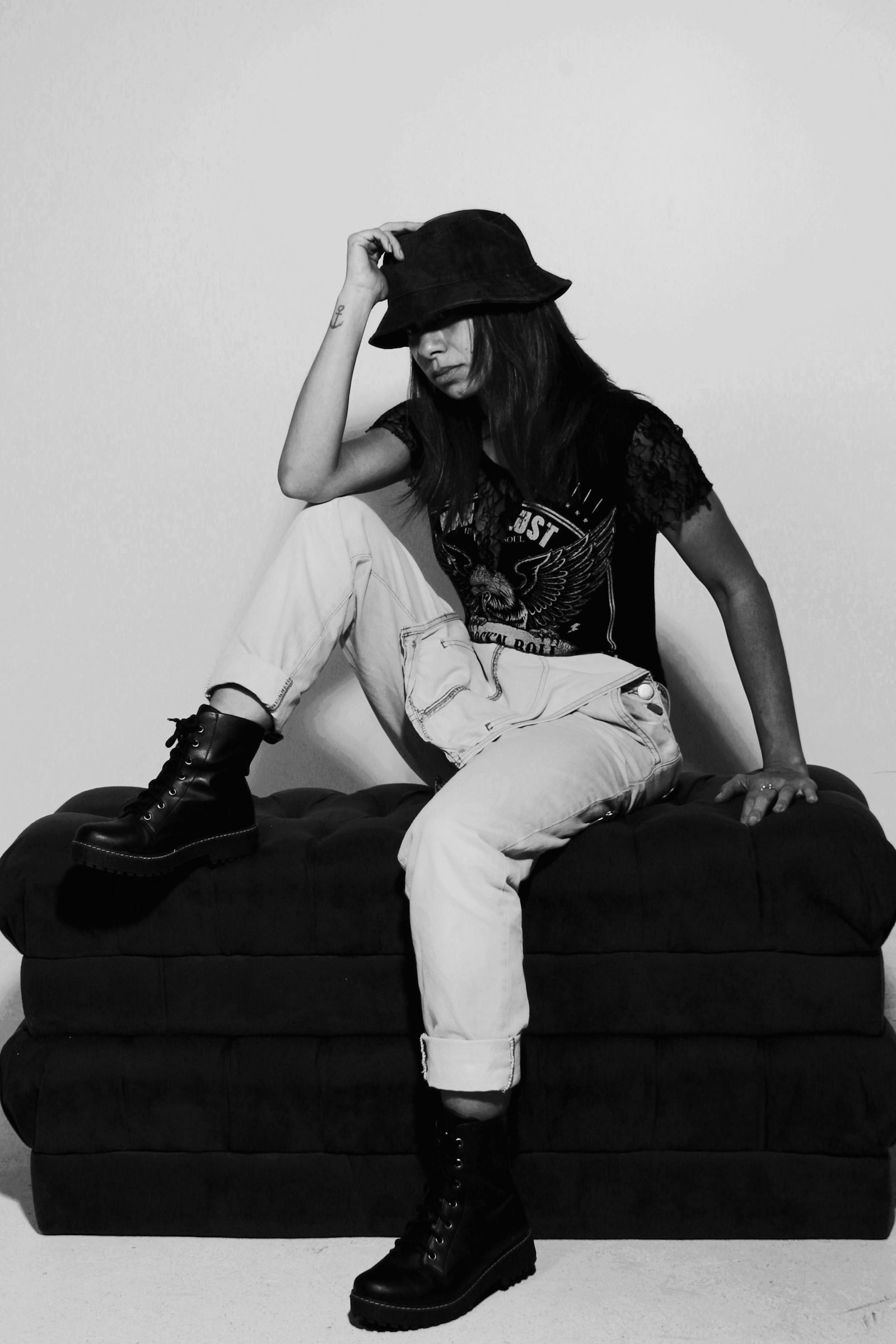
Grunge: The Collection That Got Marc Jacobs Fired in 1992
A flannel shirt from a thrift shop, a slip dress over a Tee, a pair of Doc Martens. The Seattle-imported anti-glamour that ended one designer’s job at Perry Ellis and reordered fashion for a decade.
Power Dressing: How Women Weaponized Clothes to Break the Glass Ceiling
A skirt suit with a shoulder pad, a silk blouse with a tied bow, a structured leather handbag carried into a 1985 boardroom. The decade in which women turned the office wardrobe into a uniform of intent.
Readers’ Letters
Submissions are moderated, as in any decent publication.
No letters received yet. Yours may be the first.