Minimalism: Why 1990s Restraint Still Defines Luxury Today
A bias-cut slip in undyed silk, a sleeveless shift in undyed wool, a bag with no logo at all. The decade that decided that subtraction was a luxury proposition — and was right.
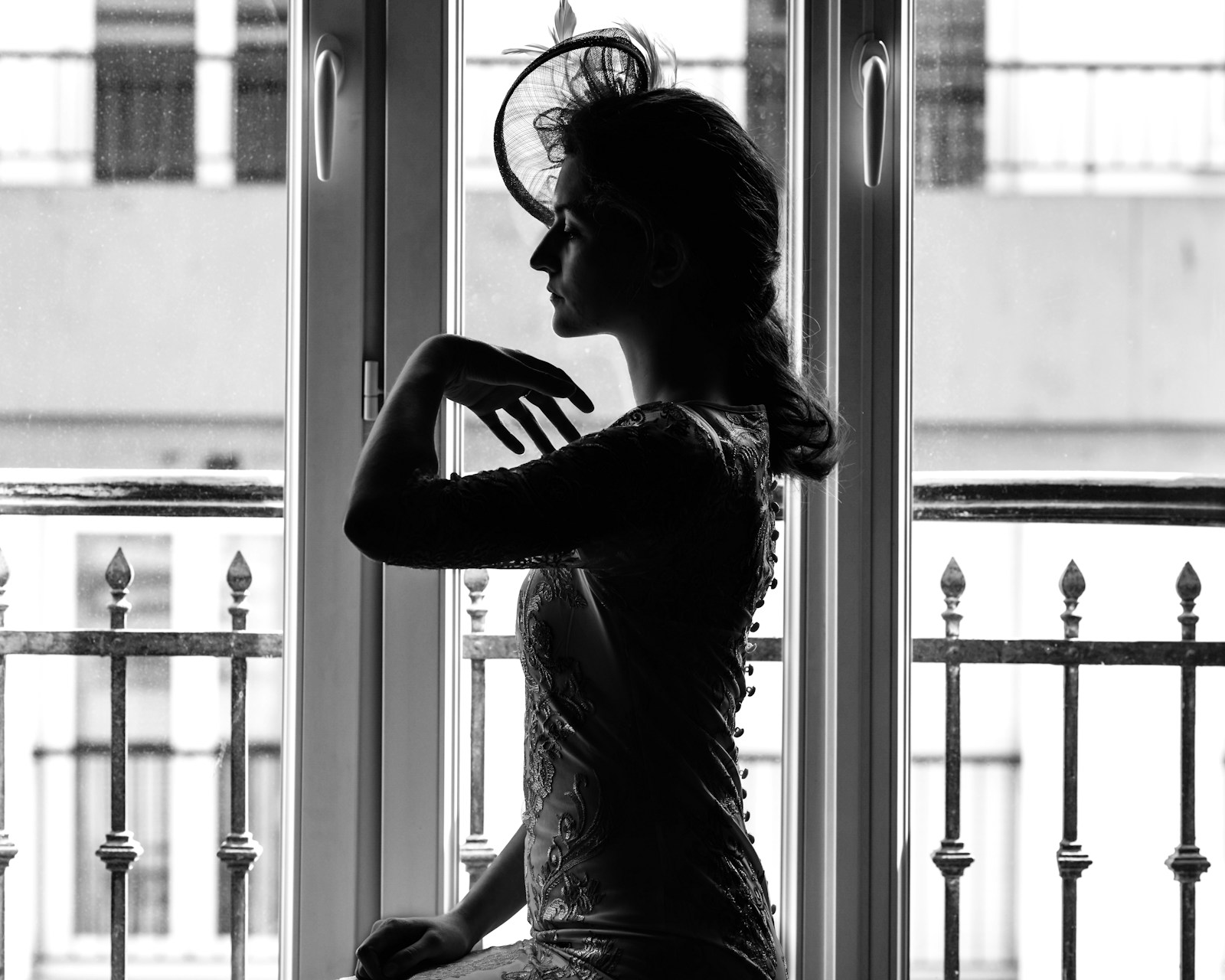
1990s Streetwear era, MCMXC–MCMXCIX
On 23 September 1996, Carolyn Bessette married John F. Kennedy Jr. on Cumberland Island, Georgia, in a bias-cut silk crepe slip designed by Narciso Rodriguez. There was no bridesmaid, no veil in the traditional sense, no train. The dress was undyed. There were no flowers in her hair. The single colour photograph that survives of the wedding (Denis Reggie's, taken from the church steps) shows her in profile against a white wall. The dress is described, in catalogue terms, as a slip with a bateau neckline.
It is the clearest single image of the 1990s minimalist proposition: that a luxury garment could be defined by what it had been removed from rather than what had been added to it. No print. No embellishment. No visible logo. A single, near-imperceptible bias seam at the side. The cost, in 1996, was reported as approximately $40,000.
Minimalism in fashion was not in the 1990s a new idea. Madeleine Vionnet had cut bias slip dresses in the 1920s. Cristóbal Balenciaga had worked in undyed wool and shantung from the 1950s. Halston's Ultrasuede shirt-dresses of the 1970s had argued from a similar position. What was new in the 1990s was the commercial dominance of the silhouette: by 1996, the most influential luxury houses in the world — Helmut Lang, Jil Sander, Calvin Klein, Prada (in its sportswear-derived early phase), Donna Karan in her DKNY line — were either explicitly or substantially minimalist. The aesthetic had won.
It has not, in the three decades since, lost.
Origins
The decade's specific minimalist trajectory began in Vienna and Hamburg before it reached New York or Paris. Helmut Lang, an Austrian designer who had opened his first Vienna shop in 1979, showed his autumn-winter 1986 collection — a sequence of slim suits, undyed shirts, and rubber-coated cottons — in Paris in 1986 to small but important press attention. By 1990 he was the most quietly influential designer in Europe. Jil Sander, in Hamburg, had been operating on near-identical principles since 1968; her atelier's defining contribution — the perfectly cut wool trouser and the perfectly cut undyed silk shirt — was, by the early 1990s, recognised as central to the period.
The American counterpart developed independently. Calvin Klein, in his eponymous label's mainline, had moved decisively away from the logo-driven aesthetic of his 1980s denim and underwear advertising; his 1992 womenswear collection was, in its undecorated economy, recognisably a minimalist statement. The hire of Francisco Costa as creative director in 2003 would later codify this as Calvin Klein's permanent identity. Donna Karan's DKNY line, founded 1989, took a more accessible and more athletic version of the aesthetic to a younger market.
By 1995 the visible high-fashion press — The New York Times style section, Vogue, Harper's Bazaar, Elle — had begun running editorials specifically positioning minimalism as the decade's definitive direction, in opposition to the maximalist French houses (Versace, Chanel under Lagerfeld, the early-1990s Gianfranco Ferré-era Dior) and to grunge's anti-glamour. The argument was that minimalism, unlike grunge, was a positive aesthetic position rather than a refusal: it argued for austerity rather than against decoration.
The Style
The minimalist 1990s wardrobe codified around six items.
The slip dress — in undyed silk crepe, charmeuse, or satin, mid-calf to floor, bias-cut, with a thin shoulder strap and either a bateau or a low-V neckline. The Narciso Rodriguez wedding dress is the most famous example; the form had been popularised earlier by Calvin Klein (autumn 1992) and by Helmut Lang (autumn 1993).
The column dress — sleeveless, knee-length to mid-calf, in undyed wool or silk crepe, cut close to the body without darts. Jil Sander's spring 1995 column dress, photographed by Peter Lindbergh, is the period's most-cited example.
The trench coat — in undyed cotton gabardine, often by Helmut Lang, Burberry, or Aquascutum, cut deliberately oversized but in clean lines, worn open or belted. The camel overcoat in cashmere served the same function for cooler weather.
The black turtleneck — in fine merino or cashmere, ribbed slightly at the cuff, worn under blazers and over slim trousers. Steve Jobs's widely-photographed black turtleneck (Issey Miyake, custom) is from 1998 and belongs to the same vocabulary.
The single-strap leather sandal, often by Jil Sander or Bottega Veneta, in undyed natural leather, with a low or no heel; or, alternatively, plain leather low-heel pumps in black, by Manolo Blahnik or Maud Frizon.
No accessories, or one structural accessory: a single Cartier Tank watch, a thin gold chain, a single pair of pearl studs. The conscious refusal of the 1980s gold-and-pearl maximalism was structural to the silhouette.
Hair was unstyled or chignon-cut. Make-up was foundation-and-mascara only; the period's signature lipstick was Mac Spice (a brown nude) or Bobbi Brown Brown 4. The aesthetic argument was that the body and face required no decoration to read as luxurious; that, in fact, decoration was evidence of unease about whether they did.
Cultural Context
The 1990s minimalist position had three contextual conditions.
The first was economic. The early 1990s was a recession decade in the US and Britain (1990–91, 1992–93); the late 1990s was a boom decade. Both halves contributed: the recession produced the cultural rejection of 1980s excess; the boom produced the disposable income to buy the resulting luxury minimalism at the prices Helmut Lang and Jil Sander were charging. A $2,000 undyed silk slip dress is not a recession garment in itself; it is, however, a recession-era aesthetic that the boom was willing to pay for.
The second was technological. The 1990s saw the introduction of silicon-based personal computing into white-collar work; by 1995 the laptop, the cellular phone, and the personal email account were widespread among professional women. The wardrobe shifted to accommodate the work. A bias slip dress, a black turtleneck, and a trench coat photograph well in fluorescent light, fold flat into a carry-on, and require no maintenance. The wardrobe was, in a sense, an interface for a new mode of professional life.
The third was conceptual. The minimalism in art and architecture (Donald Judd, Tadao Andō, John Pawson) was, by the 1990s, mainstream cultural reference. The fashion's conscious borrowing from these figures — Helmut Lang collaborated directly with Jenny Holzer in 1996 — produced a cultural register that the previous decade's more decorative fashion had not occupied. Minimalism positioned itself as the wardrobe of a more serious, more contemporary cultural class.
The pendant for that argument was that the minimalist wardrobe required, in practice, a substantial budget. A perfectly undyed silk slip dress is more expensive to produce than a printed one, because the dye disguises imperfections in the fabric. The wardrobe was austere; the bills were not. By 1998 a complete Helmut Lang or Jil Sander look retailed for $5,000–8,000.
Legacy
The minimalist 1990s did not end. It lost commercial dominance briefly in the early 2000s to Tom Ford's Gucci-led return to logo and excess (1995–2004), and to the Y2K bling era (1999–2008) that ran beside it. But by 2008 it had returned, and it has held its position since.
The vehicle for the return was Phoebe Philo's Céline, 2008–17. Philo's Céline was, in its undyed wool, its hidden seams, its no-logo position, and its absolute refusal of decoration, a direct continuation of the Helmut Lang and Jil Sander vocabulary fifteen years on. The line's commercial success — in a decade in which the rest of the industry was hyper-decorating — demonstrated that the 1990s aesthetic had a durable customer.
That customer is now ubiquitous. The contemporary luxury houses operating most clearly in the position are The Row (Mary-Kate and Ashley Olsen, founded 2006), Khaite (Catherine Holstein, founded 2016), Toteme (Elin Kling, founded 2014), Lemaire, Bottega Veneta under Daniel Lee 2018–21, and Phoebe Philo's own re-launched eponymous house (2023–present). The aesthetic is, in 2026, more commercially central than at any point since 1996.
The current revival of the 1990s minimalist wardrobe under the quiet luxury label — driven, in part, by the HBO drama Succession (2018–23) — is in formal terms a re-photographing of the same garments. The slip dress, the column dress, the camel coat, the black turtleneck, the leather sandal: the shopping list is the same.
What the 1990s minimalists won, beyond the silhouette, was a permanent cultural position for restraint as luxury. Before 1990, restraint in dress had read as either austerity (insufficient income), severity (mid-Victorian), or rejection (grunge). After 1996, restraint read as taste. That re-coding is the decade's largest legacy. The luxury industry of 2026 is, in large part, a continuous extraction of value from it.
Related Reading
- Helmut Lang — the Austrian whose collections defined the silhouette.
- Phoebe Philo — the contemporary heir.
- Calvin Klein — the American mainline that moved decisively into the position.
- Daniel Lee — Bottega Veneta’s 2018–21 update of the project.
Sources & Further Reading
- Mark Holgate, Helmut Lang (Rizzoli, 2017).
- Susannah Frankel, Visionaries: Interviews with Fashion Designers (V&A Publishing, 2005) — contains both the Lang and Sander interviews.
- Carolyn Bessette-Kennedy: A Style Icon (Abrams, 2024).
- Sarah Mower, archive of Vogue Runway reviews 1995–2017.
- Jenny Holzer–Helmut Lang collaboration archive, V&A Museum.
Anaya Deshmukh
Fashion historian and essayist based in Delhi. Former curator at the Museum of Costume, her work traces the social lives of garments across two centuries.
Related Dispatches

Streetwear: How a New York Skate Shop Conquered Paris Fashion
A graphic tee from Lafayette Street, a hoodie from Harajuku, a sneaker drop announced on Instagram. The forty-year migration of skate-and-hip-hop dressing from subculture to luxury runway.
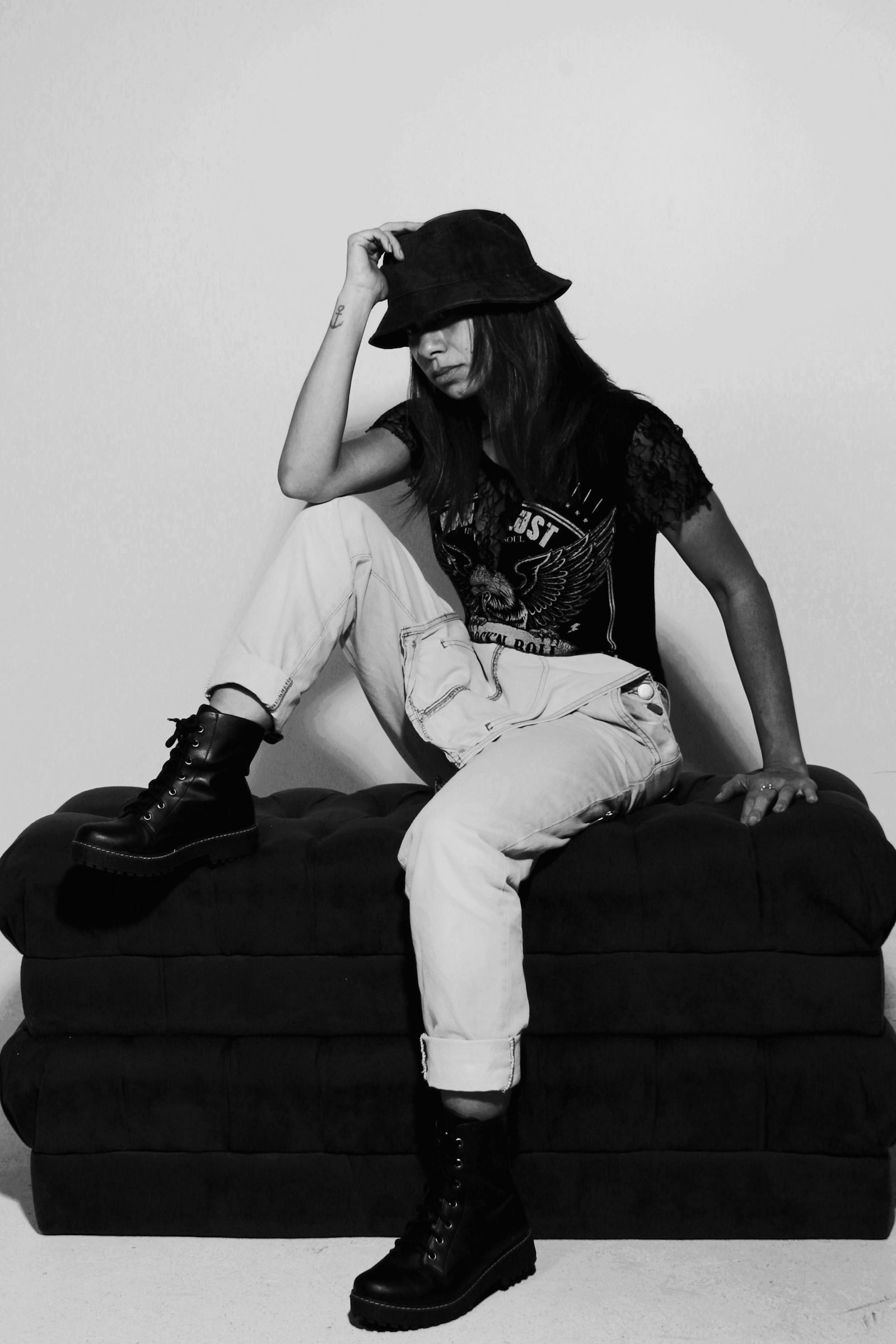
Grunge: The Collection That Got Marc Jacobs Fired in 1992
A flannel shirt from a thrift shop, a slip dress over a Tee, a pair of Doc Martens. The Seattle-imported anti-glamour that ended one designer’s job at Perry Ellis and reordered fashion for a decade.
Power Dressing: How Women Weaponized Clothes to Break the Glass Ceiling
A skirt suit with a shoulder pad, a silk blouse with a tied bow, a structured leather handbag carried into a 1985 boardroom. The decade in which women turned the office wardrobe into a uniform of intent.
Readers’ Letters
Submissions are moderated, as in any decent publication.
No letters received yet. Yours may be the first.