Punk: The Fashion Movement That Hated Fashion
Safety pins, ripped tartan, and a King’s Road shop called SEX. How a 1975 London subculture became, against its own intentions, the most influential aesthetic of the late twentieth century.

1990s Streetwear era, MCMXC–MCMXCIX
Punk wanted to ruin fashion. It ended up being fashion.
This is the irony at the centre of the movement — the trap that every successive wave of "anti-fashion" has fallen into and that punk fell into first, hardest, and on a longer time horizon than anyone in 1976 could have predicted. The rip in the t-shirt, the safety pin through the ear, the bondage trouser, the bleached hair, the tartan kilt over the bondage trouser, the doc martens, the studded leather — all of it began as a refusal of the fashion industry, and all of it has been continuously commodified by that same industry for half a century without interruption.
To watch a contemporary couture show is, more often than not, to watch a quotation of punk. Galliano. McQueen. Westwood herself, late in her career. Demna at Balenciaga. Dior under Maria Grazia Chiuri. The references are sometimes earnest, sometimes ironic, sometimes both at once. They are, in any case, unavoidable. Punk is the source code that fashion has not stopped reading from.
Origins
In November 1971, two thirty-year-old Londoners — a former art-school teacher named Vivienne Westwood and her partner, a music manager named Malcolm McLaren — took over the lease of a small shop at 430 King's Road, in the unfashionable end of Chelsea. They renamed it Let It Rock and sold Teddy Boy revival clothing: drape jackets, brothel creepers, drainpipe trousers. Within a year they were bored. The shop was renamed Too Fast to Live, Too Young to Die, then SEX, then Seditionaries. Each renaming corresponded to a new sartorial direction.
By 1975 the shop was selling — and Westwood was making — garments unlike anything available in Britain: bondage trousers with detachable straps between the legs, t-shirts printed with crucifixes and swastikas (the latter intentionally provocative, a shock-tactic that punk would later regret), mohair sweaters, rubber dresses, and the iconic Destroy and God Save the Queen shirts.
In late 1975, McLaren took on the management of a band: four young men he renamed the Sex Pistols. They wore the shop's clothes and, crucially, were photographed continuously in them. By autumn 1976, the NME and Sounds had identified a coherent visual movement. The press called it punk. The participants, mostly, did not.
Punk was an attitude, not a uniform. The fact that it became a uniform is what killed it. — Vivienne Westwood, 1981
Across the Atlantic, a parallel scene had been gestating since 1973 around the Bowery dive CBGB in New York: the Ramones in motorcycle jackets and torn jeans, Patti Smith in white shirts and skinny ties, Television in vintage thrift, Richard Hell in a deliberately torn t-shirt held together with safety pins. The American version was less stylised, less explicitly designer-led, and — the historians of the movement now agree — several months ahead of London. But it was London, and Westwood, that produced the garments.
The Style
Punk dressing, in its original 1975–79 phase, had three rules.
It had to be cheap. Everything was either thrifted, modified, or appropriated. The leather jacket was American military surplus. The boots were Doc Martens, manufactured for British workmen and bought new for under £10. The t-shirt was a school PE shirt, a band shirt, or a plain Hanes. Disposable income was not the point.
It had to be deliberately damaged. Rips were cut with razor blades and held with safety pins. Hair was bleached with peroxide, then dyed in domestic colours — the iconic spiked mohawk in green, red, or pink. Make-up was smeared rather than applied: black eyeliner across the cheekbone, lipstick over the chin. The aesthetic verb was vandalised.
It had to be confrontational. Slogans were obscene. Imagery was sexual or political. Westwood's Destroy shirt featured a crucified Christ; her God Save the Queen shirt featured Elizabeth II with a safety pin through her lip and her eyes blacked out. Public reaction was the point. A shirt that did not get its wearer thrown out of at least one pub was insufficiently designed.
The signature garments were:
- The bondage trouser — black cotton or tartan wool, with a strap connecting the legs at the knee. Borrowed from S&M shops in Soho; civilianised by Westwood.
- The mohair jumper — oversized, deliberately misshapen, in violently dyed wool. Worn over fishnet vest, under leather jacket.
- The tartan kilt — a Westwood invention from 1976, conflating Scottish nationalism, schoolgirl uniform, and street rebellion in a single garment. Punk's most stolen-from item.
- The studded leather jacket — motorcycle jacket appropriated from biker culture, modified with hand-applied studs and chains, badges sewn or pinned in dense overlapping layers.
- The ripped jean — self-modified at the thigh, knee, hip; held together with safety pins or, in extreme cases, bicycle chain.
Footwear was Doc Marten 1460 boots (introduced 1960; punk-claimed 1976) or pointed winklepicker boots; bondage trouser plus boot remained the silhouette into the 1980s.
Cultural Context
The economics matter. Britain in 1975–77 was in industrial collapse. Inflation was at 25%. The IMF had been called in. The state had power-rationed the country two years earlier. Youth unemployment was approaching 10%. The Sex Pistols' single God Save the Queen was released in May 1977 to coincide with Queen Elizabeth's Silver Jubilee; the BBC banned it; it reached number two on the chart. The official chart authority refused to print its name in the number two slot. This level of cultural temperature is difficult to reconstruct.
Punk was specifically a working-class aesthetic in its first British wave — produced by, sold to, and worn by people for whom the alternative wardrobe (the flared trouser, the wide-collared shirt, the printed silk dress) signified a middle-class respectability that was no longer available to them economically. Its DIY ethos was not posture; it was budget. The deliberate ugliness was a statement that beauty was a class possession the bearer was refusing.
The American scene around CBGB was, by contrast, more bohemian than working-class. New York punk had art-school connections, MFA-program poets, and a sophisticated relationship with European postmodernism. It was less politically angry and more conceptually angry. Patti Smith's Horses (1975) is the clearest document of this.
By 1979 the original phase had ended. The Sex Pistols had broken up after their American tour. Sid Vicious was dead. Post-punk — Joy Division, Wire, Public Image Ltd — had moved the music into more interior territory. Westwood had begun her Pirate collection, a retreat from punk's iconography toward 18th-century buccaneer romance. The shop on King's Road was renamed World's End. The first wave was a four-year object.
Legacy
What punk left, paradoxically, was a permanent vocabulary for fashion to draw from — a vocabulary that fashion has drawn from continuously, and never with diminishing returns. The bondage trouser appears in McQueen's autumn 1996 collection. The safety pin appears in Versace's spring 1994 dress for Elizabeth Hurley (the safety-pin dress, instantly iconic). The tartan punk silhouette returns in Westwood's own Anglomania of 1993, in Galliano's Christian Dior couture of 2001, in McQueen's posthumous Plato's Atlantis of 2010, in Demna's Balenciaga of 2018.
Every season since 1980 has had a punk reference somewhere on the schedule. We have, collectively, run out of the ability to be shocked by the iconography. What we have not run out of is the willingness to use it. — Sarah Mower, Vogue, 2017
The afterlife runs in two streams. There is commercial punk, available now at every high-street chain — the leopard-print mini, the tartan school skirt, the studded belt, the cheap leather jacket with pre-distressed seams. This stream is sometimes mocked as inauthentic; the original punks would have called it the worst possible outcome.
And there is conceptual punk, the line of designers — Westwood, McQueen, Margiela, Demna, Wales Bonner in some moods — who have understood that punk's real legacy is not the safety pin but the attitude that the safety pin originally encoded: that a garment can argue, that ugliness is a legitimate aesthetic position, that the relationship between maker and material can be visibly, unrepentantly hostile. This stream is, for the moment, where serious fashion still lives.
Related Reading
- Vivienne Westwood — the designer of the movement and its longest-running interpreter, until her death in 2022.
- Alexander McQueen — the second-generation inheritor; the bondage trouser as couture.
- Punk and Vivienne Westwood's SEX — a closer look at the King's Road shop.
- The 1990s Streetwear era — punk's commercial afterlife.
Sources & Further Reading
- Andrew Bolton, Punk: Chaos to Couture (Metropolitan Museum of Art, 2013).
- Jon Savage, England's Dreaming: The Sex Pistols and Punk Rock (Faber & Faber, 1991).
- Vivienne Westwood and Ian Kelly, Vivienne Westwood (Picador, 2014).
- Legs McNeil and Gillian McCain, Please Kill Me: The Uncensored Oral History of Punk (Grove Press, 1996).
- Punk archives, the Victoria and Albert Museum, London.

Ivo Marchetti
Writer and dress historian. Ivo contributes regularly on menswear, subculture, and the economics of style.
Related Dispatches
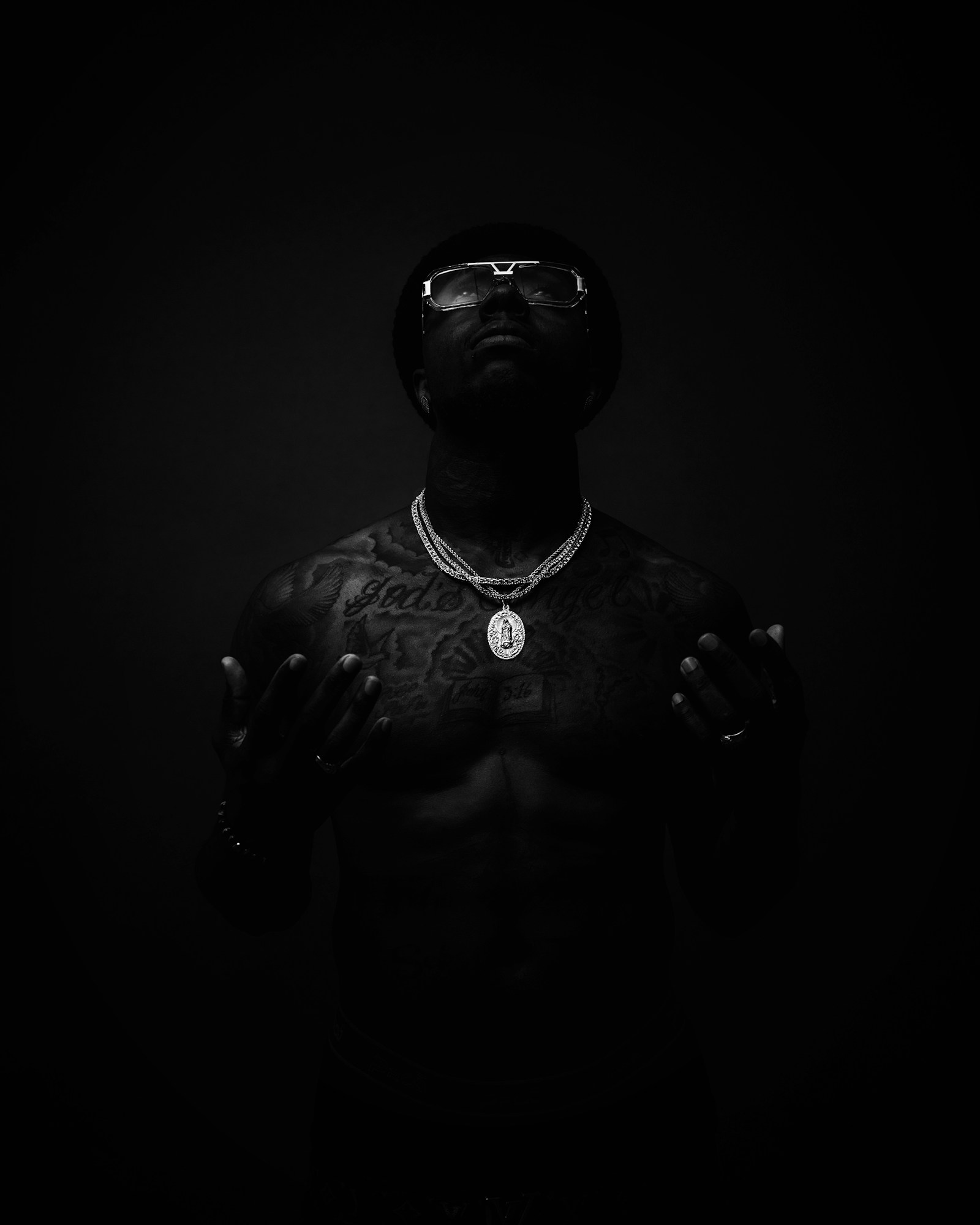
Streetwear: How a New York Skate Shop Conquered Paris Fashion
A graphic tee from Lafayette Street, a hoodie from Harajuku, a sneaker drop announced on Instagram. The forty-year migration of skate-and-hip-hop dressing from subculture to luxury runway.
Minimalism: Why 1990s Restraint Still Defines Luxury Today
A bias-cut slip in undyed silk, a sleeveless shift in undyed wool, a bag with no logo at all. The decade that decided that subtraction was a luxury proposition — and was right.
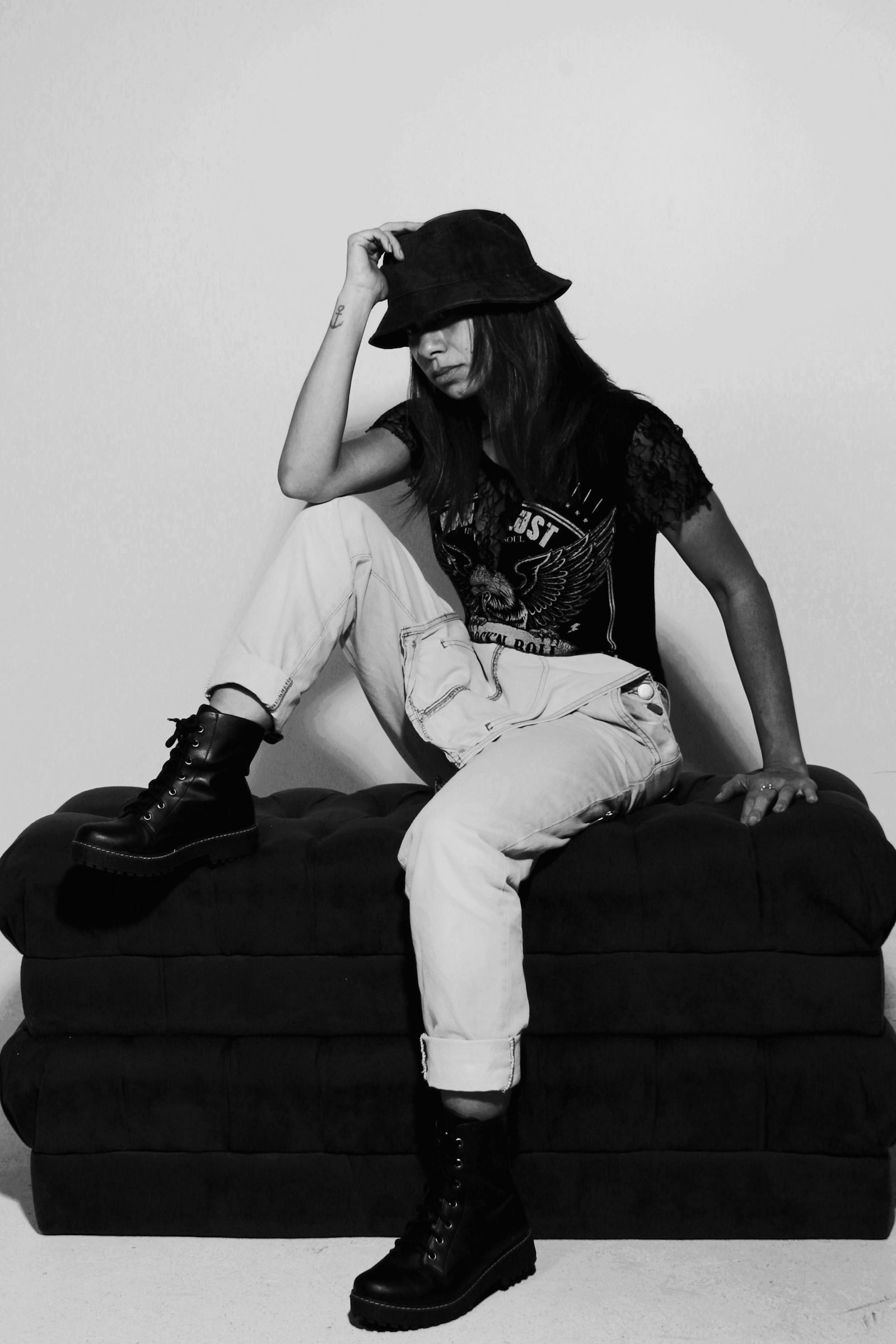
Grunge: The Collection That Got Marc Jacobs Fired in 1992
A flannel shirt from a thrift shop, a slip dress over a Tee, a pair of Doc Martens. The Seattle-imported anti-glamour that ended one designer’s job at Perry Ellis and reordered fashion for a decade.
Readers’ Letters
Submissions are moderated, as in any decent publication.
No letters received yet. Yours may be the first.