Hippie: The Fashion Movement Born from a War
Bell-bottoms, tie-dye, a caftan from Rajasthan, a peasant blouse from Romania. The first youth culture to dress as if the nation-state no longer existed.
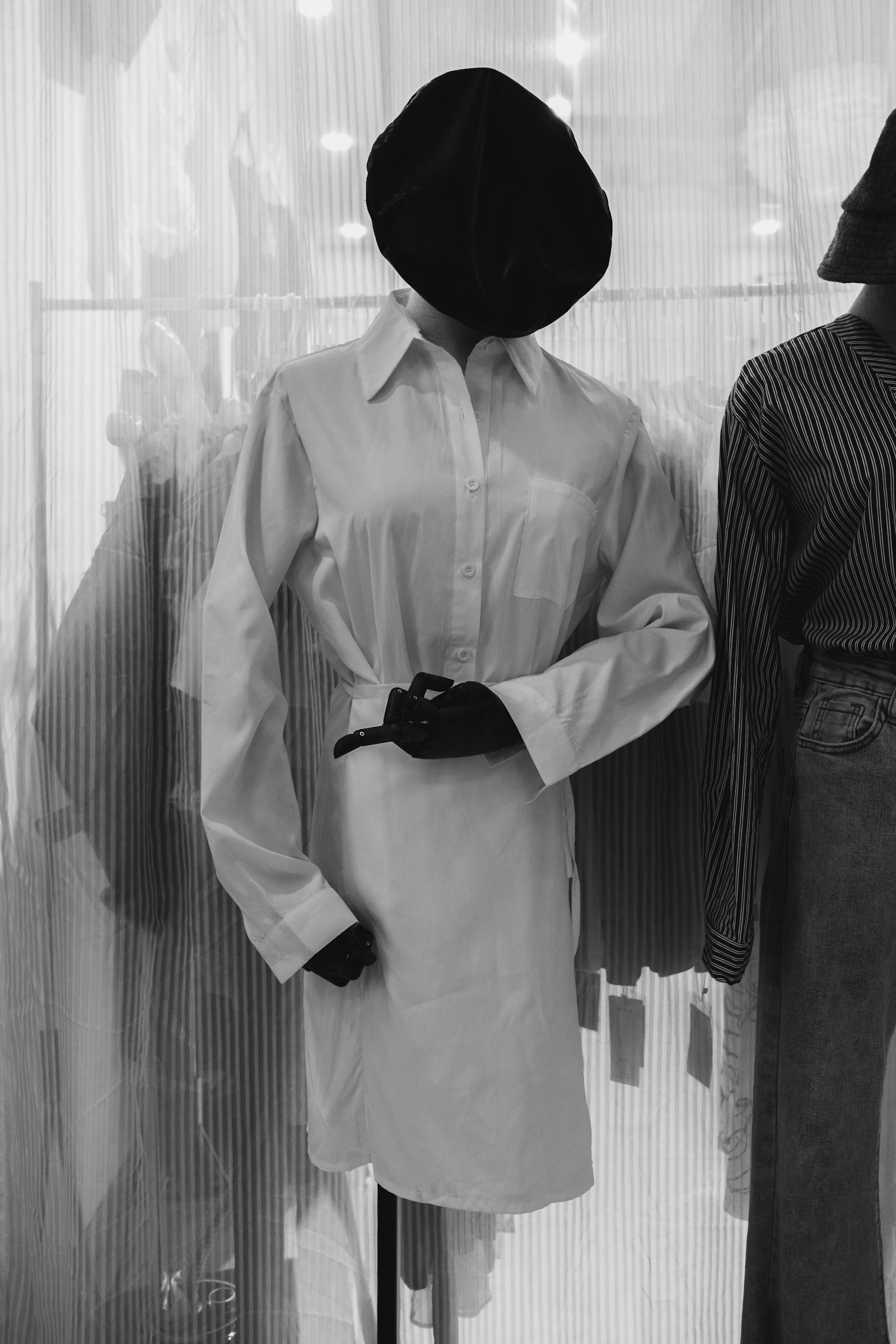
1990s Streetwear era, MCMXC–MCMXCIX
A wardrobe, like a foreign policy, is an argument about who you think you are.
The hippie movement — roughly 1965 through 1975, roughly North American and Western European, roughly middle-class in its origins and proletarian in its aspirations — argued that the nation-state had overreached. That the Cold War was a fraud. That the Vietnam War was a criminal enterprise. That the middle-class wardrobe of its parents — the suburban crew-neck, the pantsuit, the polyester shift — was a uniform of complicity. And that the correct response was to dress, instead, in whatever could be borrowed from the world's other cultures: from rural Mexico, from Afghanistan, from Rajasthan, from the Andean highlands, from the eastern European peasantry.
It was the first youth wardrobe in Western fashion history organised around an ethics rather than an economics, and the first to assume that the traditional dress of any culture on earth was available to its wearer as a general resource. Both of those commitments have, in the decades since, been re-examined. The wardrobe itself has proved more durable: every bohemian silhouette of the last fifty years — the Stevie Nicks of 1975, the Sienna Miller of 2004, the Coachella attendee of any recent summer — is a quotation of it.
Origins
The word hippie is a diminutive of hipster — itself a 1940s African-American jazz-era coinage for someone culturally in the know. By 1965 the term had settled, in the San Francisco press, to describe a specific group of young people in the Haight-Ashbury neighbourhood who had inherited some of the Beat Generation's bohemianism (Jack Kerouac, Allen Ginsberg, the City Lights bookshop) and some of the nascent psychedelic drug culture (LSD was legal in California until 1966), and had added to both a political anti-war stance shaped by the American escalation in Vietnam from 1965 onwards.
The two defining public events were the Human Be-In in Golden Gate Park, January 1967, which attracted an estimated 20,000 participants and introduced the subculture to the national press; and the Summer of Love later that year, in which an estimated 100,000 young people migrated to Haight-Ashbury for an extended summer of music, drugs, and communal living. By the time of Woodstock in upstate New York in August 1969, the subculture had become mainstream enough for 400,000 people to attend a single outdoor festival — and mainstream enough, already, for fashion magazines to be covering the wardrobe.
In parallel, a European version had developed around London's Portobello Road, King's Road (late-mod into hippie), the Oz magazine scene, and, crucially, the overland route to India. Between 1967 and 1978 tens of thousands of young Europeans travelled by bus and train through Istanbul, Tehran, Kabul, Peshawar, and New Delhi to Goa or Kathmandu, returning with Afghan coats, Indian block-prints, Kashmiri shawls, and the wardrobe assumptions that went with them.
The Style
The hippie wardrobe's core elements, visible from about 1966 onwards, were:
The bell-bottom jean, re-purposed from US Navy surplus (the bell allowed a sailor to roll up the leg easily while swabbing a deck). Widely available in army-surplus stores for under five dollars. By 1968 Levi's had introduced its own bell-bottom; by 1971 the silhouette had reached the high street.
The peasant blouse — loose cotton, often imported from Romania, Hungary, or Mexico, smocked at the yoke, puffed at the sleeve, embroidered in bright thread. The archetypal hippie garment of 1968–72.
Tie-dye, a deliberately irregular home-produced colouring technique applied to t-shirts, dresses, and bandanas. The technique itself is ancient (Japanese shibori, Indian bandhani, West African adire) but the hippie re-invention was specifically undertaken as a rejection of the uniform colours of mass-produced cloth.
Fringe, on leather vests, suede jackets, handbags, and belts — a quotation from Plains Indian regalia, and specifically a 1970s reference to the American counterculture's romanticisation of Native American resistance.
Ethnic imports: the Afghan sheepskin coat (imported by Granny Takes a Trip in London), the caftan (Middle Eastern and North African in origin, popularised by Halston in America and Thea Porter in Britain), the kurta pyjama (North Indian, arriving via the overland route), the serape (Mexican), the Peruvian knit cardigan. These items were, by 1969, sold on every counterculture high street from Haight-Ashbury to King's Road to Ibiza.
Long hair, for men and women both, usually centre-parted, usually unstyled, frequently braided with beads or ribbon. The stylistic refusal was equal in force to any of the clothing items: the American business world in 1965 required a short-back-and-sides, and a man with shoulder-length hair in 1967 was, in most US workplaces, unemployable on sight.
Accessories were tactile and layered: embroidered headbands, glass-beaded necklaces, Afghan lapis-lazuli pendants, silver toe-rings, flower garlands at gatherings. Footwear was the Jesus sandal (leather, buckled at the ankle), the Birkenstock (introduced to America in 1966 and adopted by hippies before its modern wellness-era revival), the moccasin, or bare feet.
Cultural Context
The war context is foundational. The United States committed ground combat troops to Vietnam in 1965 and began the bombing of North Vietnam the same year. By 1968, the year of the Tet Offensive, 500,000 American soldiers were in-country and the domestic protest movement — campus sit-ins, draft-card burnings, the 1968 Democratic National Convention clashes in Chicago — had become a central feature of American political life. The hippie wardrobe was, explicitly, a wardrobe of opposition to that war. The long hair was draft-incompatible. The ethnic imports argued against American cultural supremacy. The peace-sign pendant was iconography.
Alongside the war, three other currents shaped the subculture: the civil rights movement, whose African-American aesthetic — dashikis, kente cloth, the afro — the (mostly white) hippies adopted at varying levels of political seriousness; the environmental movement, which produced the first Earth Day in 1970 and shaped the counterculture's growing vegetarianism and hostility to synthetic fabric; and the sexual liberation movement, which the birth-control pill (FDA-approved 1960) had made possible and the decade's legal decisions (Griswold v. Connecticut 1965; Eisenstadt v. Baird 1972) had consolidated.
Economically, the movement inhabited an interesting contradiction. Its politics were anti-consumerist; its wardrobe required access to a global supply of ethnic goods, international travel, and a willingness to pay premium prices for "authentic" imports. The Afghan coat at Granny Takes a Trip cost, in 1969, more than a working-class London woman's weekly wage. The movement was, in its commercial expression, a luxury product even when it insisted on a peasant silhouette.
This contradiction has been re-litigated continuously. The charge of cultural appropriation — not a phrase in widespread use until the 1990s — was first systematically levelled at the hippie wardrobe by Native American and African-American critics in the late 1960s. Their argument, which has held up well, was that the easy aesthetic adoption of colonised peoples' dress, by the children of the colonising class, did little to redistribute the power that enabled that adoption.
Legacy
The hippie wardrobe mainstream-assimilated with speed. By 1970, every American department store carried bell-bottoms; by 1972, every European one carried caftans. The movement itself fragmented: into yoga and communal living (which persisted into the wellness-industry mainstream of the 1990s–present); into back-to-the-land agrarianism; into environmentalism; into the more overtly political radicalism of the 1970s left; and, for a significant minority, into cult religion and disillusion.
The wardrobe survived better than the politics. Halston built a couture house in New York (1968–84) on a luxury reading of the silhouette. Yves Saint Laurent's 1976 Opium collection and his 1967 African collection were direct couture translations. Diane von Fürstenberg's wrap dress of 1974, though often coded as disco, is a near-direct descendant of the hippie day-dress silhouette — softer, more draped, lower-effort, sexually frank. Ossie Clark and Celia Birtwell made the silhouette the wardrobe of the London demi-monde through the entire decade.
In the decades since, bohemian has become one of the two or three permanent setting-positions of womenswear, returning every few seasons in a slightly altered form: the 2001–05 Sienna Miller boho revival, the late-2010s festival-dressing phenomenon, the early-2020s return of patchwork denim and peasant blouses, the persistent Coachella uniform. Every iteration is a quotation of 1968–72.
The argument the original hippies tried to make — that to wear the clothes of a poorer culture was an act of solidarity rather than acquisition — has not held up. But the wardrobe itself, stripped of that argument and re-sold as aesthetic, is as commercially durable today as it was half a century ago. The wardrobe, in the end, outlived the ethics that produced it.
Related Reading
- Halston — the American luxury reading.
- Yves Saint Laurent — the 1967 African and 1976 Opium collections.
- The 1990s Streetwear era — where hippie bohemianism shaded into festival dressing.
- The Sari, Across Centuries — a related reflection on the ethics of inherited dress.
Sources & Further Reading
- Jenny Boyd, It's Not Only Rock'n'Roll: Iconic Musicians Reveal the Source of their Creativity (John Blake, 2013).
- Barry Miles, Hippie (Sterling, 2004).
- Marnie Fogg, Boho Style (Thames & Hudson, 2009).
- Victoria and Albert Museum, Ossie Clark exhibition archive.
- Todd Gitlin, The Sixties: Years of Hope, Days of Rage (Bantam, 1987).
Anaya Deshmukh
Fashion historian and essayist based in Delhi. Former curator at the Museum of Costume, her work traces the social lives of garments across two centuries.
Related Dispatches
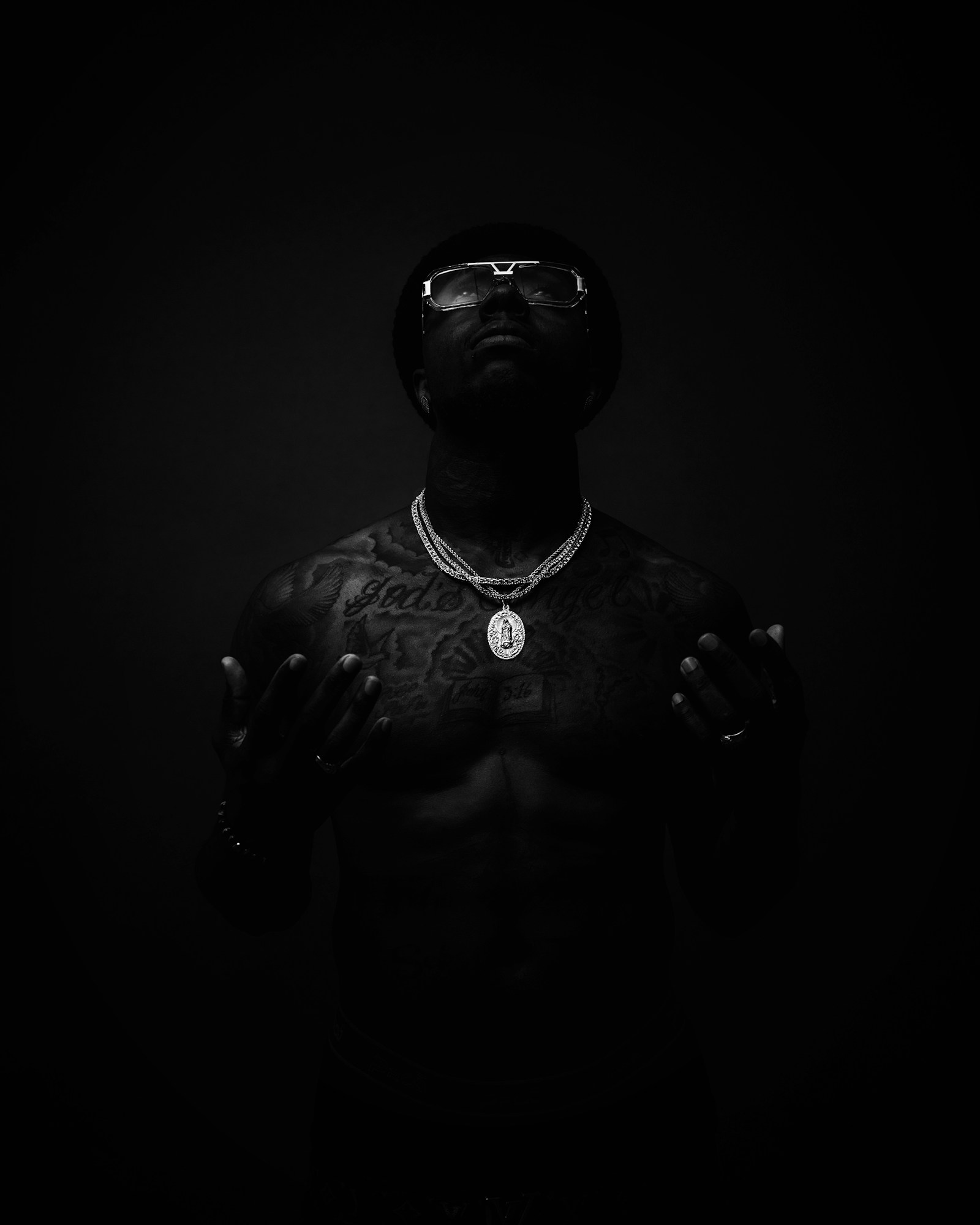
Streetwear: How a New York Skate Shop Conquered Paris Fashion
A graphic tee from Lafayette Street, a hoodie from Harajuku, a sneaker drop announced on Instagram. The forty-year migration of skate-and-hip-hop dressing from subculture to luxury runway.

Minimalism: Why 1990s Restraint Still Defines Luxury Today
A bias-cut slip in undyed silk, a sleeveless shift in undyed wool, a bag with no logo at all. The decade that decided that subtraction was a luxury proposition — and was right.
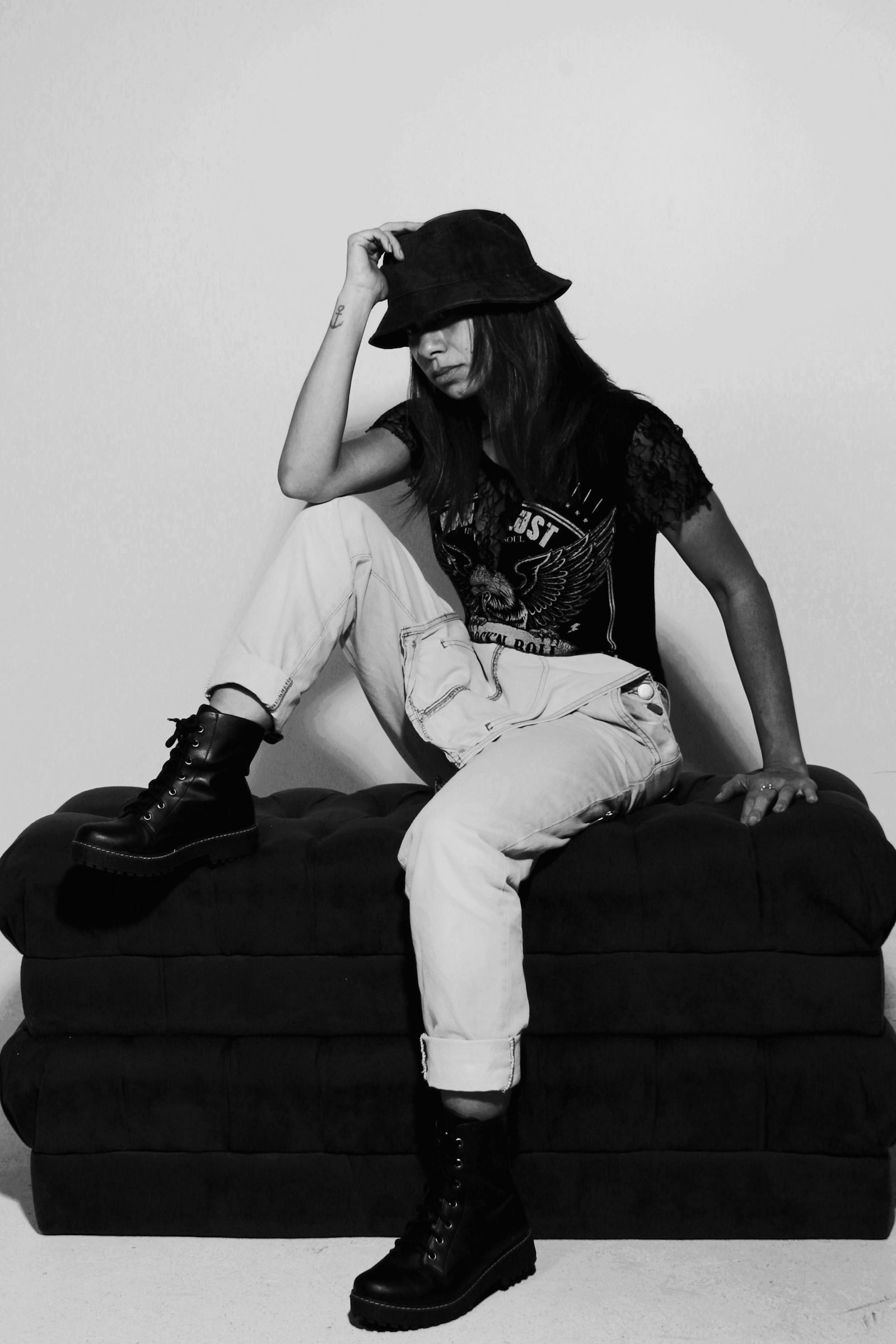
Grunge: The Collection That Got Marc Jacobs Fired in 1992
A flannel shirt from a thrift shop, a slip dress over a Tee, a pair of Doc Martens. The Seattle-imported anti-glamour that ended one designer’s job at Perry Ellis and reordered fashion for a decade.
Readers’ Letters
Submissions are moderated, as in any decent publication.
No letters received yet. Yours may be the first.