United Kingdom
Tradition meets rebellion.
British fashion has always operated on two registers. On one hand: Savile Row, the Queen's dressmakers, the three-piece suit, the heritage trench. On the other: punk, Mary Quant, McQueen, the St Martins BA. No country oscillates more productively between craft and revolt, or exports either in greater quantity.
Two Countries in One Wardrobe
Britain has never had a single fashion identity. It has, instead, two — and the tension between them has produced most of what is distinctive about British dress.
The first is Savile Row. The bespoke tailoring trade established itself in Mayfair in the mid-eighteenth century and codified itself in the nineteenth: Henry Poole on Savile Row from 1846; Beau Brummell's cult of the impeccable simple suit; Prince Albert's mourning wardrobe that made black the Victorian colour. By 1900 the Row was the global standard for men's formal dress, and it is, in a diminished form, still operating — Ozwald Boateng, Richard James, Anderson & Sheppard continue the trade under the sign of bespoke craft.
The second is the street. London, alone among European capitals, has consistently produced fashion from below — from the Teddy Boys of the 1950s to the Mods of the 1960s to the Punks of 1976, each movement dressed first by its participants and only later by its designers. Mary Quant, on the King's Road from 1955, was the first to sell this street vocabulary back to its source at scale. Vivienne Westwood, from 1971 onward, did the same for punk. No other country in Europe has a comparable tradition of youth-led sartorial revolution.
The Quant Revolution and After
Quant's Bazaar on the King's Road did something Paris couture had never dreamed of: it sold clothes designed for a seventeen-year-old shopgirl to a seventeen-year-old shopgirl, on a wage she could afford. The mini skirt, which Quant later claimed to have invented (Courrèges disputed this), was the defining garment of the 1960s, and it came out of a retail concept that was the antithesis of everything Paris stood for: fast, cheap, youth-targeted, ready-to-wear.
London in the 1960s became, for the first time in a century, a fashion capital in its own right — Vogue editor Diana Vreeland's "Youthquake," the boutiques of Carnaby Street, the Beatles and their Tommy Nutter suits. The decade ended with the economic shock of the 1970s, but the formula had been proved: London could set the international agenda.
Punk and the St Martins Generation
The 1976 punk explosion was the most complete British fashion revolution since the mini. Vivienne Westwood and Malcolm McLaren, at the Chelsea shop they had renamed SEX, produced a wardrobe — bondage trousers, ripped T-shirts, the Anarchy shirt — that was explicitly anti-luxury, anti-haute couture, and anti-good taste. By 1980 its motifs had been absorbed into mainstream fashion at every price point. Punk remains the most-quoted British movement and the most globally exported.
The 1990s added a second export: the Central Saint Martins MA, which produced Alexander McQueen (1992), John Galliano (1984), Stella McCartney (1995), Hussein Chalayan (1993), and many of the next two decades' most influential designers. McQueen in particular — Highland Rape (1995), Voss (2001), Plato's Atlantis (2010) — redefined what a fashion show could be. The contemporary British establishment (Jonathan Anderson at Loewe, Phoebe Philo relaunched, Simone Rocha, Grace Wales Bonner) is largely the St Martins generation, grown up.
The Contemporary Moment
British fashion in the 2020s is still operating on two tracks. The heritage brands — Burberry, Barbour, Mulberry, Paul Smith — sell a version of Britishness that is essentially Edwardian: the trench, the waxed jacket, the tweed. The conceptual London houses — Simone Rocha, Molly Goddard, Grace Wales Bonner, Priya Ahluwalia — sell a version that is global, post-colonial, and almost entirely new.
What unites the two, as it always has, is a national confidence in clothing as a language. In few other countries does an eighteen-year-old care as much what they wear. It is the substrate on which both the Row and the St Martins BA rest.
United Kingdom’s Designers, in Order of Arrival
Reading from past to present, with cultural context interleaved between the portraits.
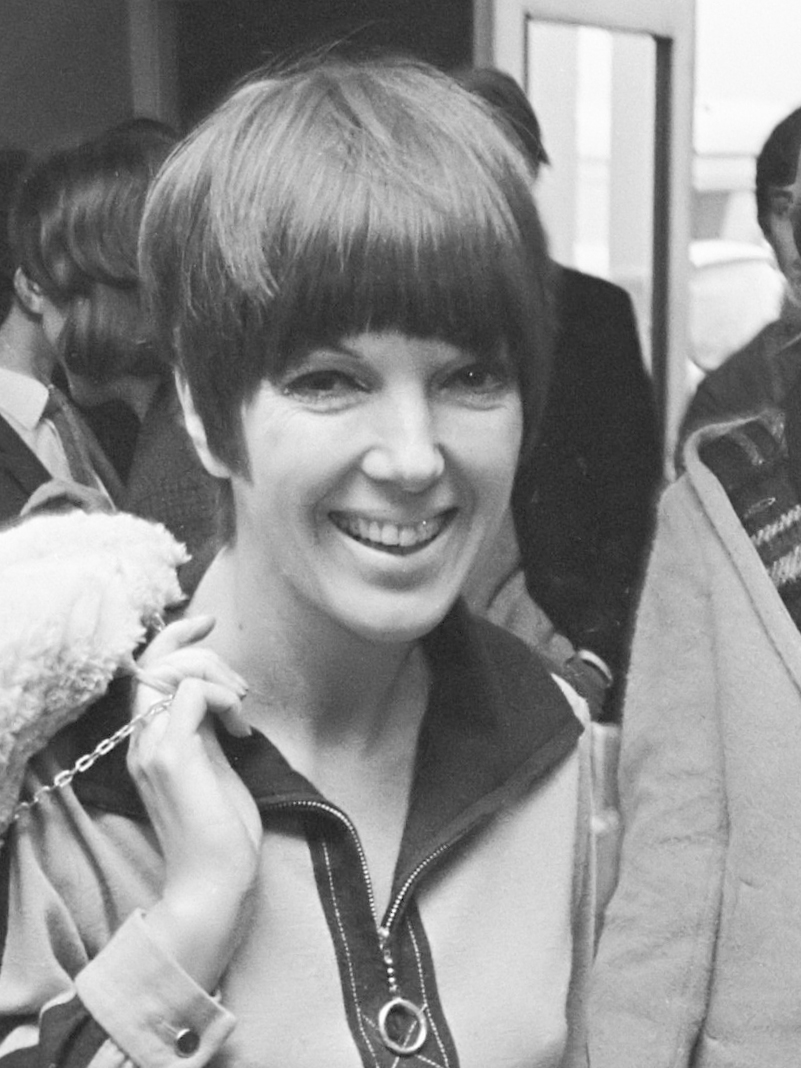
Dame Mary Quant
The miniskirt (early 1960s)
The Welsh art-school graduate who opened *Bazaar* on the King’s Road in 1955 and, over the next decade, dressed Swinging London in the miniskirt.
Read full profile →
Dame Vivienne Westwood
Bondage trousers
A former schoolteacher from Derbyshire who introduced the safety pin as a design element and then, in late career, brought back the Victorian corset.
Read full profile →
Ossie Clark
The 1970s bias-cut maxi
The Liverpool art-school graduate who dressed the Rolling Stones and the rest of bohemian London in bias-cut chiffon — and died, murdered, in a bedsit in Notting Hill.
Read full profile →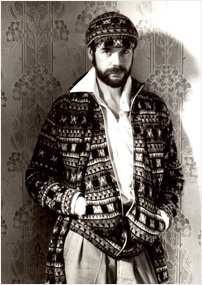
Bill Gibb
Patchwork knitwear (with Kaffe Fassett)
The Aberdeenshire farmer’s son who built the most romantically historical British couture of the 1970s, and whose shooting stars on Twiggy became a decade-defining image.
Read full profile →
Duro Olowu
Print-on-print dressing
The Lagos-born, London-based designer whose print-on-print dresses became the defining silhouette of Michelle Obama’s first-term wardrobe — and whose curatorial work has repositioned African aesthetics in museum practice.
Nigerian-British; based in London.
Read full profile →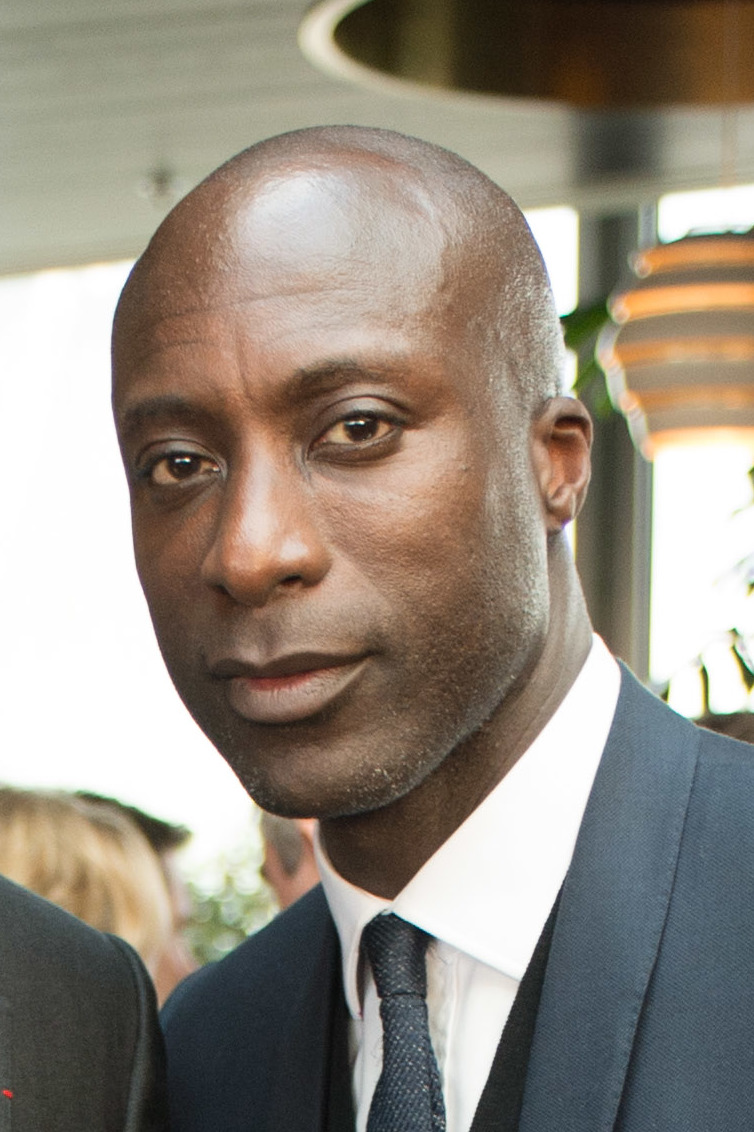
Ozwald Boateng
First Black tailor on Savile Row
The North London Ghanaian who opened on Savile Row at twenty-eight — the street’s first Black master tailor — and reintroduced saturated colour to a century of navy and grey.
British-Ghanaian; pioneer of bespoke Savile Row tailoring.
Read full profile →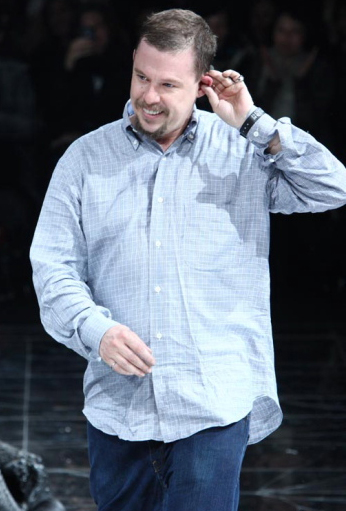
Alexander McQueen
Highland Rape (1995)
The East End taxi driver’s son who apprenticed on Savile Row, and died at forty while running the most theatrical couture house in Paris.
Read full profile →
Hussein Chalayan
Afterwords transforming dresses (2000)
The London graduate who buried his first collection in a garden for three months, and for twenty years has treated the runway as a philosophy department.
Cypriot-British; trained and based in London.
Read full profile →
Stella McCartney
Vegan luxury
The London designer who refuses to use animal products and has, for twenty-three years, built a globally-distributed luxury house on that refusal.
Read full profile →
Phoebe Philo
Céline’s "quiet luxury" (2008–2017)
The Parisian-born London designer whose 2008–2017 Céline is cited by a generation as the wardrobe that defined a decade — and whose 2023 self-titled debut was the most-anticipated launch in recent memory.
Read full profile →
Sarah Burton
Kate Middleton’s wedding dress (2011)
The Manchester-born designer who succeeded Alexander McQueen after his 2010 death and sustained the house’s identity for thirteen years better than any widow-designer succession has before.
Read full profile →
Jonathan Anderson
Loewe craft revival
The Magherafelt-born designer who, over eleven years, rebuilt Loewe as the most culturally coherent luxury-craft house in Europe — and took over Dior in 2025.
Northern Irish; based between London and Madrid.
Read full profile →
Daniel Lee
The Pouch (2019)
The Bradford-born designer who produced at Bottega Veneta from 2018 to 2021 the most viral luxury silhouettes of the late 2010s — and now runs Burberry.
Read full profile →
Simone Rocha
Feminine darkness
The Dublin-born daughter of John Rocha whose feminine-gothic couture has, in twelve years, become a defining London vocabulary.
Irish-Chinese; based in London.
Read full profile →
Molly Goddard
Hand-smocked tulle ball dresses
The Ladbroke Grove designer whose hand-smocked tulle dresses — worn by Villanelle in the second season of *Killing Eve* — became the defining youthful-romantic silhouette of the late 2010s.
Read full profile →
Grace Wales Bonner
Afro-European menswear
The London designer whose Afro-European menswear label is producing the most intellectually coherent contemporary investigation of Black diasporic masculinity in dress.
British-Jamaican; based in London.
Read full profile →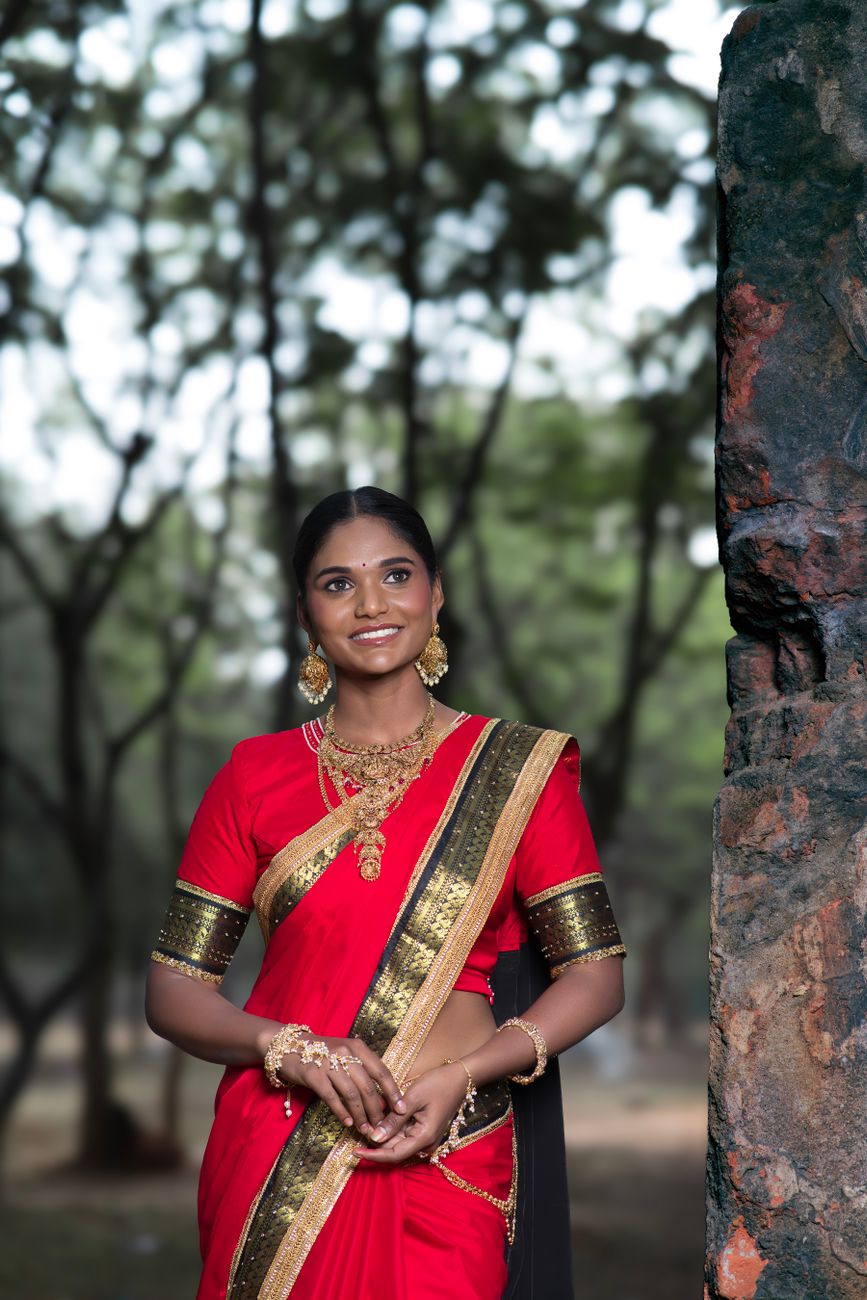
Priya Ahluwalia
Vintage-archive reconstruction
The London-born Indian-Nigerian designer whose eponymous label reconstructs garments from vintage archives — and whose 2019 photo-book *Sweet Lassi* remains a reference for contemporary Indian menswear scholarship.
British-Indian-Nigerian; based in London.
Read full profile →