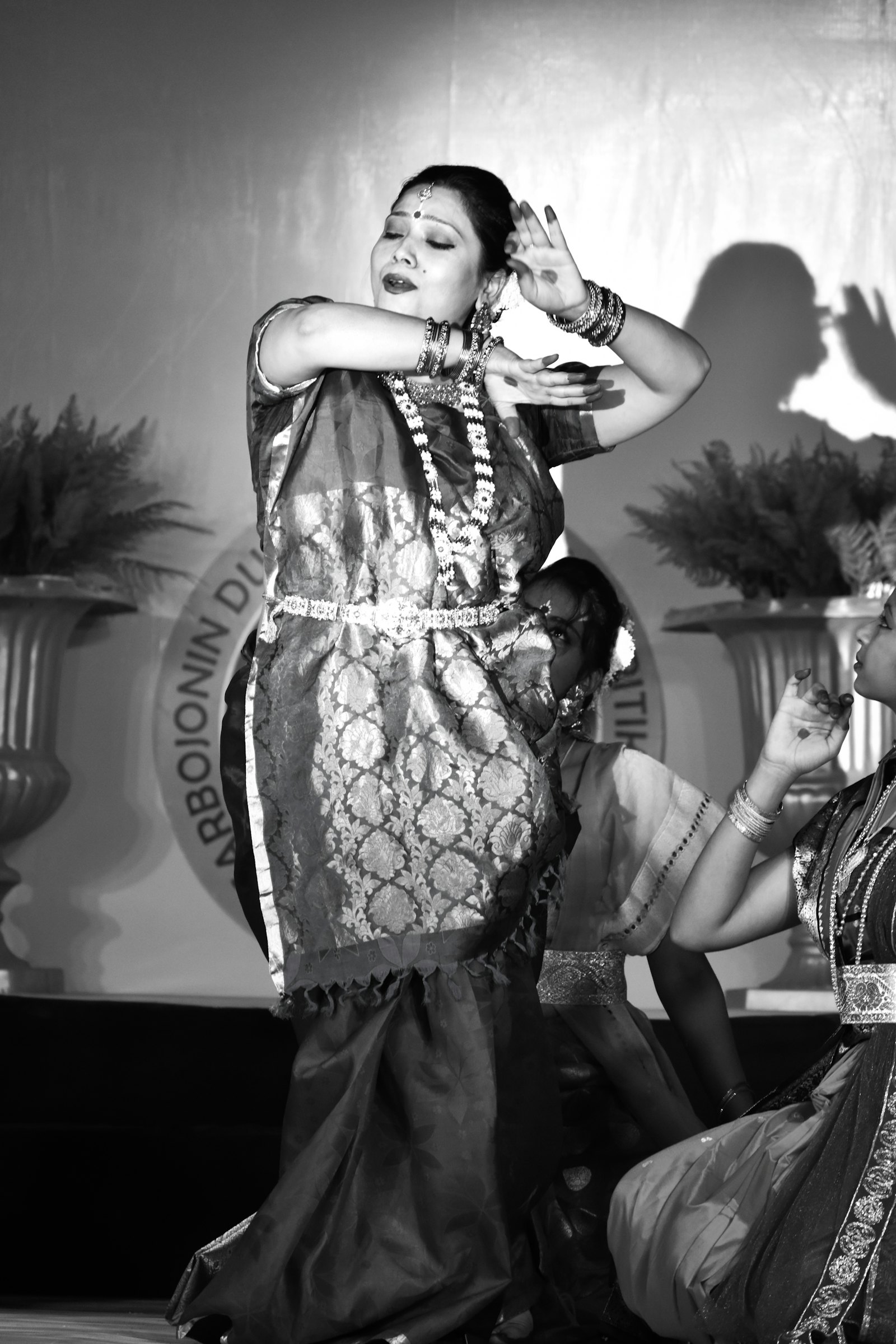
India
Five thousand years of textile mastery.
India's fashion story is the longest continuous textile tradition on Earth. Mughal jamdani, Banarasi brocade, Kashmiri pashmina, Gujarati bandhani, Bengali tant — these are not 'heritage crafts' in the European sense but living industries. Modern Indian couture, from Ritu Kumar's revivals to Sabyasachi's maximalism to Rahul Mishra's Paris haute couture slot, is built entirely on this substrate.
Five Thousand Years of Cloth
No country has a longer continuous textile history than India. Cotton was being spun, woven, and exported from the Indus Valley by 3000 BCE. The Arthashastra, composed around 300 BCE, already specifies standards for royal textiles. When Roman merchants in the first century CE complained that the empire's gold was flowing east to pay for Indian cottons and silks, they were describing a trade that was already two millennia old.
The Mughal period (1526–1857) represents the technical apogee of this tradition. The karkhana — the imperial workshop — produced jamdani (the figured muslin of Bengal so fine that a sari would pass through a ring), brocade from Banaras, pashmina shawls from Kashmir, embroideries from Lucknow (chikankari) and Gujarat (mirror-work). Much of what the eighteenth-century European courts wore as "Indiennes" or "chintz" was produced in Indian workshops for British and French export. For much of the modern era, India did not import European fashion — it was European fashion's textile.
The Colonial Rupture and the Swadeshi Response
British industrial policy in the nineteenth century deliberately dismantled the Indian handloom industry to protect Lancashire mills. The collapse was catastrophic — by 1900 the proportion of Indian cotton cloth that was Indian-made had fallen from nearly 100% to under 40%. Mahatma Gandhi's Swadeshi movement (1905 onward) made the spinning wheel — the charkha — a nationalist symbol and the hand-spun, hand-woven khadi its political uniform. Gandhi's loincloth was not an ascetic gesture. It was a critique of the global textile economy.
Independence in 1947 triggered a deliberate national return to indigenous cloth. Prime Minister Jawaharlal Nehru wore the sherwani and the achkan. Indira Gandhi wore hand-woven saris exclusively. State institutions — the Weavers' Service Centres, the Handloom Board, the Crafts Museum — documented and preserved the craft lineages the British had tried to erase.
Ritu Kumar and the Birth of Modern Indian Couture
Modern Indian fashion, as an industry, begins with Ritu Kumar, who opened her first Calcutta atelier in 1966. Kumar was the first Indian designer to treat the country's textile heritage — block print, zardozi, handloom, mirror work — as couture material rather than folk craft. Her 1980 launch of a ready-to-wear line was the first premium Indian fashion brand. By the 1990s she had trained or influenced almost every Indian designer who mattered.
The 1980s and 1990s saw the emergence of the Delhi–Mumbai axis: Rohit Bal's theatrical Mughal revivalism; Tarun Tahiliani, who opened Ensemble (Mumbai's first multi-designer store) in 1987; Rohit Khosla, Abu Jani & Sandeep Khosla. In parallel, the Bombay film industry was quietly becoming the largest single employer of Indian fashion talent. Bhanu Athaiya won India's only Oscar for costume design (Gandhi, 1982). Manish Malhotra reshaped Bollywood costume from the 1990s onward.
Sabyasachi and the Global Moment
Sabyasachi Mukherjee, a 1999 graduate of NIFT Calcutta, is the single most influential Indian designer of the twenty-first century. His maximalist, archival, textile-heavy aesthetic — rooted in Bengal, but quoting Rajasthani block print, Banarasi brocade, and Parsi gara — reshaped what a globally legible Indian luxury wedding looked like. By 2010, the "Sabyasachi bride" had displaced the Manish Malhotra bride as the dominant luxury-wedding silhouette across India, Pakistan, and the diaspora. In 2021 Aditya Birla Fashion took a 51% stake at a valuation of ₹398 crore — the first time an Indian couture house had been valued at that scale.
Parallel to the luxury story, a new conceptual Indian fashion was emerging: Rahul Mishra (Paris haute couture member since 2020), Aneeth Arora (Péro, rural cooperative knitwear), Gaurav Gupta (sculptural evening wear on the Paris couture calendar), Anamika Khanna (the country's first true ready-to-wear couturier). In 2020 Mishra became the first Indian to show on the official Paris haute couture calendar.
The Contemporary Moment
Indian fashion in the 2020s operates on a scale no other market matches. The wedding economy alone — estimated at $50 billion annually — supports an entire couture industry that exists largely independent of the Western fashion calendar. The diaspora wedding market, from Toronto to Sydney to Houston, has globalised Indian couture without requiring its designers to leave India.
The craft economy underlying all of it remains intact. Banaras still weaves brocade for Sabyasachi. Jamdani still comes from Bengal. The karigars of Lucknow still embroider chikankari for Delhi ateliers. India is the only major fashion country where the supply chain is not imported from somewhere else. It is, by several millennia, the oldest fashion country in the world.
India’s Designers, in Order of Arrival
Reading from past to present, with cultural context interleaved between the portraits.
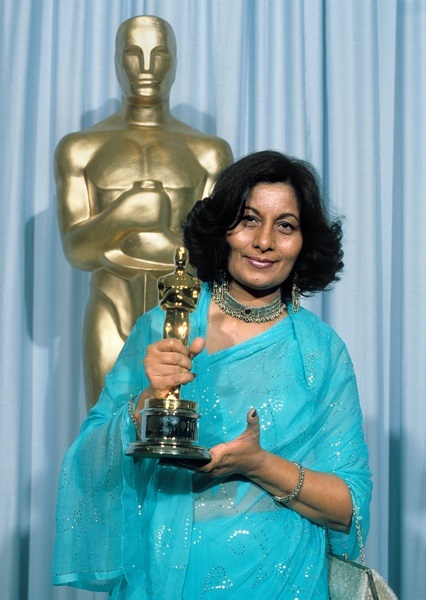
Bhanu Athaiya
First Indian Oscar winner (Best Costume Design, Gandhi, 1983)
The Kolhapur miniature-painter who, in 1983, became the first Indian to win an Academy Award, and who dressed four decades of Indian cinema.
Read full profile →
Ritu Kumar
Revival of block printing and zardozi
The Amritsar-born museologist who, in 1969, opened a boutique in Calcutta and began a fifty-year revival of Indian craft.
Read full profile →
Wendell Rodricks
Goan minimalism
The Bombay-born Goan minimalist who made resort-wear into a serious Indian category, wrote the defining book on Goan dress, and opened India’s only dedicated costume museum.
Read full profile →
Rohit Bal
Kashmiri-Mughal revivalism
The Srinagar-born showman of Indian fashion, whose runway presentations — until his death in 2024 — were the closest thing Indian couture has had to performance art.
Read full profile →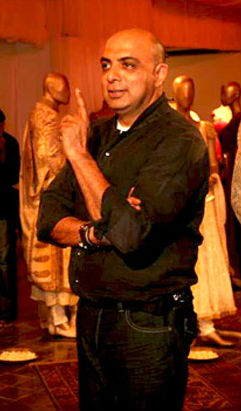
Tarun Tahiliani
Ensemble (1987) — India’s first multi-designer boutique
The Wharton MBA who opened India’s first multi-designer boutique in 1987, and then engineered the couture sari as an aerodynamic object.
Read full profile →
Manish Malhotra
Bollywood couturier
The Mumbai designer who has costumed more than a thousand Bollywood films since 1990 — and, in 2023, took the Bollywood vocabulary to Paris Couture Week.
Read full profile →
Anamika Khanna
First Indian designer at Paris Couture Week (2007)
The Jaipur-born Kolkata designer who, in 2007, became the first Indian designer to show at Paris Couture Week.
Read full profile →
Sabyasachi Mukherjee
Bengali bridal couture
The Kolkata NIFT graduate whose Belgravia flagship opened in 2023 — and who has dressed, in between, the majority of India’s most-photographed brides.
Read full profile →
Rahul Mishra
First Indian designer on the Paris couture calendar (January 2020)
The Malhausi-born son of a Uttar Pradesh farmer who, in January 2020, became the first Indian designer to show on the Paris haute couture calendar.
Read full profile →
Gaurav Gupta
Sculptural couture
The Delhi-born CSM graduate whose sculpturally draped couture gowns — worn by Beyoncé, Priyanka Chopra, Lizzo — joined the Paris Couture Week calendar in 2023.
Read full profile →
Aneeth Arora
Slow-fashion handcraft
The Udaipur-born designer whose Péro label has, since 2009, become the definitive Indian slow-fashion practice.
Read full profile →